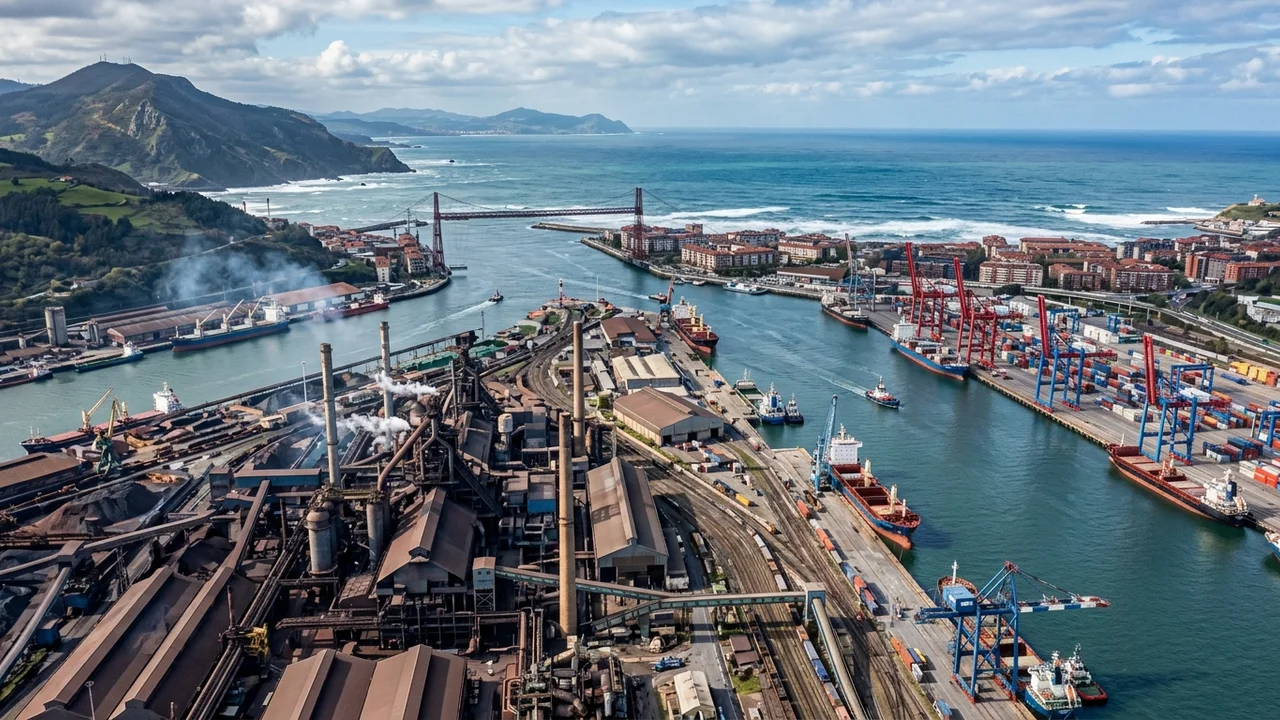
Spain's CBAM-covered imports include cement, aluminium, steel, and fertilizers, with Spanish companies representing one of the more active importer populations in the EU's southern industrial corridor. The National Competent Authority (NCA) for Spanish importers under Regulation (EU) 2023/956 is the Oficina Española de Cambio Climático (OECC), operating under the Ministerio para la Transición Ecológica y el Reto Demográfico (MITECO). Spanish importers of cement clinker from North Africa and primary aluminium from the Gulf region face the full authorized declarant obligation chain, including registration with the EU CBAM Registry, embedded emissions data collection, third-party verification, and annual certificate surrender. Every obligation a Spanish importer must meet in 2026 and the specific role the OECC plays in administering the process are covered below.
Caption: Cement clinker imports from Morocco and Turkey entering Spanish ports are subject to CBAM obligations under Regulation (EU) 2023/956, administered through the OECC.
What Is CBAM and Why Does It Apply to Spanish Importers
CBAM is a certificate-based mechanism under Regulation (EU) 2023/956 that requires EU importers of carbon-intensive goods to purchase certificates proportional to the embedded CO₂ emissions in their imports, priced at the EU ETS carbon price, to prevent carbon leakage. The definitive phase began January 1, 2026. CBAM is not a tariff, not a border tax, and not a customs duty. It is a regulatory certificate obligation running parallel to standard EU customs procedures.
For Spanish companies, this creates a distinct category of compliance administered through the OECC. Importers must first secure authorized CBAM declarant status, then collect verified embedded emissions from non-EU production installations, then surrender CBAM certificates proportional to those emissions each year by September 30. The first declaration covering 2026 imports is due September 30, 2027.
Spain's geographic position and trade relationships make CBAM obligations particularly relevant to its cement and aluminium import flows. Spanish importers source cement clinker primarily from Morocco and Turkey, both of which have no qualifying carbon pricing schemes for Article 9 deduction purposes as of April 2026. Understanding the full framework of the EU CBAM regulation, including its certificate mechanics and legal basis under Article 192(1) TFEU, is the essential foundation before engaging the OECC for authorization.
OECC Authorization: The Spanish Application Process
The OECC processes authorized declarant applications through the Authorization Management Module (AMM) of the EU CBAM Registry, accessible at cbam.ec.europa.eu. Spanish importers authenticate via the EU Customs Trader Portal using EORI credentials through the UUM&DS system, the same authentication platform already used for EU ETS registry access in Spain.
The application deadline for continued provisional importing during the definitive phase was March 31, 2026, as set by Article 17(7a) of Regulation (EU) 2023/956, inserted by the Omnibus amendment Regulation (EU) 2025/2083. Importers who submitted a complete application by that date may continue importing while the OECC processes their file. The OECC has a maximum of 120 days from receipt of a complete application to issue an authorization decision, as specified by Article 4(1) of Implementing Regulation (EU) 2025/486. The 120-day clock pauses during any period where the OECC requests additional information.
The documents required for the OECC application are governed by IR 2025/486, Articles 4 through 8. The required submission set comprises the following items, all of which must be current and complete at submission:
- Valid EORI number and Spanish business registration documentation (escritura de constitución or equivalent)
- Spanish tax identification number (NIF or CIF)
- Audited financial statements for the preceding 2 to 3 financial years, or a bank guarantee for entities established less than 2 years
- Evidence of a 5-year customs and tax compliance history, demonstrating no serious customs violations, no convictions for tax fraud, smuggling, money laundering, or environmental offenses, and no active insolvency proceedings
- Description of CBAM goods to be imported, including CN codes, estimated annual tonnage, countries of origin, and production installation names with addresses and geographic coordinates
- Identity of the person within the company who bears legal responsibility for CBAM compliance declarations
- An internal CBAM compliance procedures document
The OECC may refuse authorization on grounds including serious customs violations in the prior 5 years, active insolvency proceedings, or inclusion on the EU consolidated financial sanctions list. Once the OECC grants authorization, Spanish importers access their CBAM account in the EU CBAM Registry, which holds certificate holdings, import transaction records automatically populated from customs data, declaration history, and verification report links.
Spanish importers seeking the full picture of EU importer obligations, including how the 50-tonne annual de minimis threshold under Article 2(3a) interacts with import volumes, can review the complete authorized declarant requirements at cbamguide.com before submitting their OECC application.
Spain's Key CBAM Import Sectors: Cement and Aluminium
Spain's CBAM exposure concentrates in 2 sectors of particular commercial weight: cement (including clinker) and primary aluminium. Both sectors have distinct emission profiles, calculation methodologies, and supply-chain challenges that Spanish importers must navigate under the OECC's oversight.
The table below summarizes the key parameters for each sector relevant to Spanish importers, calculated at the current EU ETS reference price of approximately €70 per tonne CO₂ (late March 2026 market data, which fluctuates daily):
| Sector | Key CN Codes | Emission Factor | Gross CBAM Cost @ €70 | Indirect Emissions Priced |
|---|---|---|---|---|
| Cement clinker | 2523 10 | ~0.85–0.87 tCO₂/t | ~€59–61/t | Yes |
| Portland cement | 2523 21, 2523 29 | ~0.83 tCO₂/t | ~€58/t | Yes |
| Primary aluminium (unwrought) | 7601 | ~1.5 tCO₂/t (direct only) | ~€105/t | No |
| Aluminium profiles and bars | 7604, 7605, 7606 | ~1.5 tCO₂/t (direct basis) | ~€105/t | No |
| Steel (BF-BOF route) | 7207, 7208–7217 | ~2.0 tCO₂/t | ~€140/t | No |
These are gross costs before the free allocation adjustment. In 2026, the CBAM factor is 2.5%, meaning only 2.5% of embedded emissions require certificate coverage. The effective net cost for a Spanish importer of 10,000 tonnes of Portland cement at approximately €58/t gross CBAM cost is: 10,000 × 0.83 tCO₂/t × 2.5% × €70 = approximately €14,525 in 2026. This is a manageable figure that grows sharply through 2030 as the free allocation phase-out accelerates.
Cement Imports: Morocco and the Default Value Problem
Cement and cement clinker are the most commercially significant CBAM sector for Spain. Spain imports clinker from Morocco, Turkey, and Egypt, with Morocco representing a key trade partner given geographic proximity and the existing port infrastructure at Algeciras and Valencia. None of these origin countries has a qualifying carbon pricing scheme for Article 9 deduction purposes as of April 2026.
The default value challenge for cement is acute. The CBAM default value for Portland cement from "other countries" (a category that captures Morocco and Egypt) is approximately 1.584 tCO₂e/t, compared to typical actual emissions from Moroccan cement plants of approximately 0.83–0.88 tCO₂/t. The gap is nearly 80%. At €70/tCO₂, using the default value instead of verified actual data costs approximately €49/t in excess certificate obligations. Spanish importers sourcing cement from Morocco have a strong financial incentive to work with Moroccan producers to collect actual embedded emissions data and engage an accredited verifier before the September 30, 2027 declaration deadline.
Verifier registration in the CBAM Registry opens September 1, 2026. Physical site visits to non-EU production installations are mandatory for the first verification period covering 2026 imports. Spanish importers should identify and contract accredited verifiers now, in April 2026, to secure scheduling availability before the bottleneck intensifies. The cement sector under CBAM includes detailed guidance on verification obligations, CN code coverage, and the indirect emissions calculation for this sector.
Aluminium Imports: Gulf and UAE Supply Chains
Primary aluminium is the second major CBAM sector for Spanish importers. Spain's aluminium import mix includes unwrought primary aluminium (CN 7601) and downstream aluminium products, such as profiles (CN 7604), strip (CN 7606), and wire (CN 7605), from Gulf Cooperation Council producers, particularly the UAE (EGA, Emirates Global Aluminium) and Bahrain (ALBA, Aluminium Bahrain).
Aluminium under CBAM covers both CO₂ and perfluorocarbon (PFC) emissions, specifically CF₄ (with a GWP of 6,630) and C₂F₆ (with a GWP of 11,100). Only direct emissions are priced under CBAM for aluminium. Indirect emissions from electricity consumption in aluminium smelting, which can range from 9 to 12 tCO₂e/t including grid electricity on a coal-intensive grid, are not priced under the current CBAM framework. This distinction affects the calculation method Spanish importers must use when collecting data from Gulf producers.
Neither the UAE nor Bahrain operates a carbon pricing scheme qualifying for Article 9 deduction as of April 2026. Spanish importers sourcing from these countries bear the full embedded direct emissions obligation with no offset. The authorized declarant authorization application to the OECC must specify the production installations and CN codes, including the split between primary aluminium and downstream aluminium products.
How Spanish Importers Calculate and Surrender CBAM Certificates
Certificate surrender is the culminating obligation in the CBAM compliance cycle. Spanish importers must understand the calculation sequence, the quarterly holding requirement, and the timeline for certificate purchases before the September 30, 2027 deadline arrives.
The calculation process runs in 4 stages: determine total embedded emissions per goods type and country of origin; deduct any Article 9 carbon price credit (currently nil for Spain's primary supply chains); apply the free allocation adjustment (CBAM factor: 2.5% in 2026); and surrender the resulting net certificates. Each stage requires the verified emissions data from the production installation, which must come from an accredited verifier for actual values or from the Commission's default value tables in IR 2025/2621 if actual data is unavailable.
CBAM certificates become available for purchase from February 1, 2027, through the OECC via the Common Central Platform. The price is based on the quarterly average of EU ETS auction clearing prices for 2026 imports (Article 22(1a), inserted by Regulation (EU) 2025/2083). For 2027 and subsequent year imports, the certificate price shifts to the weekly average of EU ETS auction closing prices (Article 22(1)). No secondary market exists for CBAM certificates. All purchases and sales are conducted exclusively through the OECC.
The quarterly holding requirement applies from 2027 onward. At the end of each calendar quarter, Spanish importers must hold in their CBAM registry account at least 50% of the cumulative embedded emissions of all CBAM imports since the start of that calendar year. Non-compliance with this threshold triggers a formal notice from the OECC. The buyback provision allows importers to sell back up to 50% of certificates purchased in a given year, at the original purchase price, by October 31 of the surrender year.
The penalty for failing to surrender sufficient certificates is €100 per tonne CO₂e not covered (Article 26(1), as amended by Regulation (EU) 2025/2083). This penalty does not extinguish the surrender obligation. The importer must still procure and surrender the missing certificates in addition to paying the penalty. The total cost of non-compliance is therefore approximately €170/tCO₂e at current ETS prices. Unauthorized importers who import CBAM goods without OECC authorization face penalties of €300 to €500 per tonne CO₂e.
What Is the CBAM Compliance Timeline for Spanish Importers in 2026 and 2027
The compliance timeline for Spanish importers covers 6 critical milestones between April 2026 and September 2027. Each milestone is sequential: missing or delaying an earlier step blocks later steps.
The 6 milestones for the 2026–2027 cycle are listed below in chronological order:
- March 31, 2026: OECC authorization application deadline for continued provisional importing (Article 17(7a)); applications submitted after this date do not qualify for provisional import status
- April–August 2026: Engage accredited verifiers and initiate data collection agreements with non-EU production installations; verifier registration opens September 1, 2026, so contracting must precede formal registration
- September 1, 2026: Verifier registration opens in the CBAM Registry; physical site visits to Morocco, UAE, Bahrain, Turkey, and other origin installations can commence
- November–December 2026: Finalize embedded emissions data from all production installations covering 2026 imports; obtain and file verification reports for actual values
- February 1, 2027: CBAM certificate sales open through the OECC; Spanish importers begin purchasing certificates for 2026 embedded emissions at the quarterly average 2026 ETS price
- September 30, 2027: First annual CBAM declaration deadline covering calendar year 2026; certificates surrendered to the OECC at time of filing
Record-keeping obligations extend beyond this cycle. All CBAM records, including customs declarations, supplier emissions data, monitoring plans, verification reports, and certificate purchase confirmations, must be retained until the end of the 4th year following the declaration year, approximately 4 to 5 years from the date of import.
Caption: The CBAM certificate purchase and surrender cycle for Spanish importers under OECC administration, from February 2027 certificate sales through the September 30, 2027 first declaration deadline.
CBAM and Spanish Importers: Practical Compliance Questions
This section addresses the 5 most common compliance questions from Spanish importers navigating the OECC process in the first definitive year.
Does the 50-Tonne De Minimis Threshold Apply to Spanish Cement Importers
Spanish cement importers with annual CBAM-covered import volumes of 50 tonnes or less are exempt from authorization and surrender obligations under Article 2(3a) of Regulation (EU) 2023/956, as amended by Regulation (EU) 2025/2083. The 50-tonne threshold applies per importer across all CBAM sectors combined, measured in annual net mass. A Spanish construction materials company importing 40 tonnes of cement clinker per year faces no CBAM obligation. A company importing 60 tonnes per year triggers the full compliance chain with the OECC. Electricity and hydrogen imports have no de minimis threshold regardless of volume.
Do Spanish Importers from Morocco Qualify for an Article 9 Carbon Price Deduction
No Article 9 deduction is available for imports from Morocco as of April 2026. Morocco does not operate a qualifying legally binding carbon pricing scheme. The OECC cannot process an Article 9 deduction claim for Moroccan origin goods until the European Commission publishes a recognition decision for a Moroccan carbon pricing mechanism, which has not been announced. Spanish importers sourcing from Morocco must cover the full embedded emissions obligation with CBAM certificates, making verified actual emissions data from Moroccan producers especially valuable relative to the punitive default values. Obtaining authorized declarant authorization through the OECC is the prerequisite before any certificate surrender obligation arises, regardless of origin country.
Is Aluminium from Norway Subject to CBAM for Spanish Importers
Aluminium imports from Norway are exempt from CBAM. Norway is listed in Annex III of Regulation (EU) 2023/956 as a country within the European Economic Area (EEA), and its electricity system is tightly integrated with the EU ETS framework. Spanish importers sourcing primary aluminium or aluminium profiles from Norwegian producers, such as Hydro, face no CBAM obligation on those flows. The OECC does not require authorized declarant status for Annex III country imports.
What Happens If a Spanish Importer Misses the OECC Authorization Deadline
A Spanish importer who did not submit a complete OECC authorization application by March 31, 2026, loses access to provisional importing status under Article 17(7a). Imports of CBAM goods after the definitive phase start (January 1, 2026) without authorization expose the company to the unauthorized importer penalty of €300 to €500 per tonne CO₂e under Article 26(2). The OECC still accepts post-deadline applications, and the importer may continue importing if the application is accepted, but the provisional protection does not apply retroactively. Spanish importers in this situation should consult the CBAM compliance checklist to assess their current exposure and remediation options.
How Does CBAM Interact With Spain's Existing EU ETS Obligations
Spanish companies that are already EU ETS participants (for example, cement producers operating Spanish kilns) interact with CBAM only as importers, not as ETS-covered installations. CBAM applies to the embedded emissions in imported goods. EU ETS applies to direct emissions from Spanish production installations. A Spanish cement company that both operates domestic kilns and imports clinker from Morocco faces ETS obligations for its production and CBAM obligations for its imports. The 2 systems operate in parallel and are administered separately: EU ETS through the Spanish Climate Change Office (OECC also coordinates here) and CBAM through the OECC as NCA. For Spanish CBAM cement importers with both domestic ETS coverage and import obligations, the key planning variable is the CBAM factor trajectory, which rises from 2.5% in 2026 to 48.5% in 2030 and 100% in 2034.
Do Spanish Importers Need a Verifier for Every Production Installation
Verified actual emissions data is required from each production installation separately. A Spanish importer sourcing Portland cement from 3 Moroccan production installations must arrange 3 verification engagements, each requiring a physical site visit for the first reporting period. A single verifier firm can cover multiple installations across a trip to Morocco if capacity and scheduling allow. Default values, drawn from IR 2025/2621, eliminate the verification requirement for that installation but apply a 10% mark-up in 2026 (rising to 20% in 2027 and 30% from 2028 onward). For aluminium sector under CBAM sourcing from Gulf producers, the site visit obligation to UAE or Bahrain facilities applies the same way.