CBAM Russia exposure operates on two simultaneous tracks: EU sanctions since February 2022 have already cut Russian fertilizer and steel exports to the EU, and the EU carbon border adjustment mechanism established by Regulation (EU) 2023/956 now adds a carbon cost obligation on whatever trade volume remains. Russia responded by filing WTO DS639 on May 12, 2025, the only formal CBAM challenge filed by any country to date. Understanding how these two layers interact is essential for EU importers of Russian-origin fertilizers and steel who are planning compliance for the September 30, 2027 declaration deadline.
This article covers Russia's CBAM-exposed sectors, the DS639 dispute mechanics, the Article 9 deduction status, and the real compliance burden facing EU importers in 2026 and beyond.
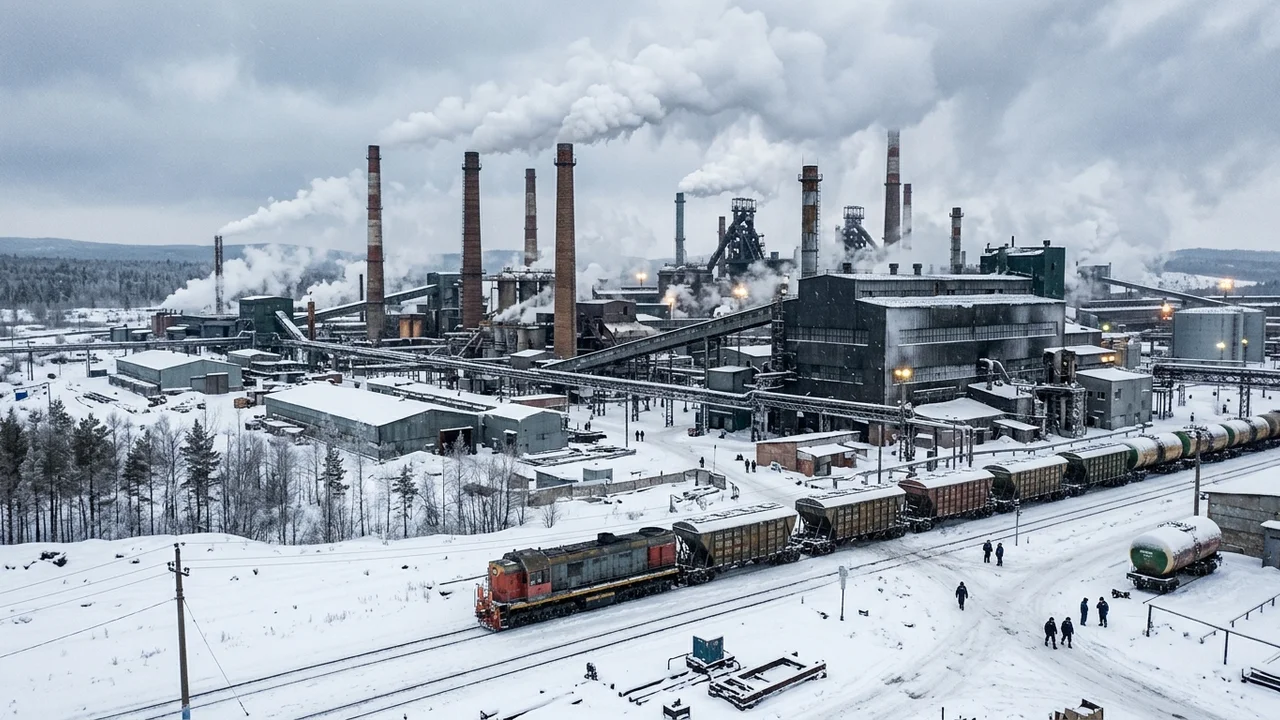
Caption: Russia's CBAM Russia trade in fertilizers and steel to the EU is now layered with sanctions tariffs and embedded emissions obligations under Regulation (EU) 2023/956.
What Is the CBAM Russia Situation in 2026?
Russia is the only country that has filed a formal WTO challenge against the EU Carbon Border Adjustment Mechanism, making its position structurally different from other affected exporters such as India, Turkey, and China. Russia's CBAM exposure is concentrated in two sectors: nitrogen fertilizers (urea, ammonia) and steel. These same sectors are already restricted by EU sanctions, which means the practical trade impact of CBAM Russia is smaller in absolute volume than it was before February 2022, but the legal and compliance complexity is greater.
The EU carbon border adjustment mechanism came into its definitive phase on January 1, 2026. Importers who bring Russian-origin fertilizers or steel above the 50-tonne annual de minimis threshold into the EU are now subject to full CBAM obligations. The first CBAM declaration covering calendar year 2026 is due September 30, 2027, and certificate purchases begin February 1, 2027.
Russia currently has no qualifying carbon pricing scheme for the purposes of Article 9 of Regulation (EU) 2023/956. Russia operates a token carbon levy that is neither effectively enforced nor set at levels that would generate a meaningful deduction for EU importers. This means EU importers of Russian-origin goods cannot claim any Article 9 offset when calculating their CBAM certificate obligation.
Russia's CBAM-Exposed Sectors: Trade Volumes and Embedded Emissions
Russia's two primary CBAM sectors are fertilizers and steel. Both carry high embedded emissions relative to their export price, and both face stacked trade barriers in 2026. The table below shows Russia's CBAM exposure across these sectors, including gross CBAM cost estimates at the current EU ETS reference price of approximately €70 per tonne of CO₂.
| Sector | Key Products | Emission Factor (tCO₂e/t) | Gross CBAM Cost @ €70/tCO₂ | Article 9 Deduction | Sanctions Layer |
|---|---|---|---|---|---|
| Nitrogen fertilizers (urea) | CN 3102 10 (urea), CN 2814 (ammonia) | ~2.5 tCO₂e/t | ~€175/t | None | €40–45/t rising to €315–430/t by July 2028 |
| Nitrogen fertilizers (ammonium nitrate) | CN 3102 30 | ~1.5–2.0 tCO₂e/t | ~€105–140/t | None | Same stacked tariff schedule |
| Steel (BF-BOF route) | CN 7207, 7208, 7213 | ~2.0 tCO₂/t | ~€140/t | None | EU sanctions restrict direct imports |
| Steel (EAF scrap route) | CN 7209, 7214 | ~0.5 tCO₂/t | ~€35/t | None | Same |
| Aluminium (primary) | CN 7601, 7604 (RUSAL) | ~1.5 tCO₂/t (direct) | ~€105/t | None | Partial sanctions restrictions apply |
Fertilizers include both direct and indirect embedded emissions under CBAM. Urea production via the Haber-Bosch process generates CO₂ from natural gas reforming and N₂O during downstream application, with both gas types covered under Annex I of Regulation (EU) 2023/956. CBAM steel covers direct emissions only, which means indirect electricity emissions from Russian electric arc furnaces are not included in the CBAM certificate calculation.
The stacked cost for Russian urea reaching an EU buyer in 2026 combines the 6.5% ad valorem import duty, the new EU additional tariff of €40–45/t on Russian and Belarusian fertilizers (effective July 2025, rising to €315–430/t by July 2028), and the CBAM gross cost of approximately €175/t for urea. At the 2026 CBAM factor of 2.5%, the net CBAM surcharge in 2026 is small (approximately €4.38/t for urea) but it rises to approximately €84.88/t by 2030 when the CBAM factor reaches 48.5%, before the sanctions tariff has itself risen to €315/t. For any EU importer still sourcing Russian urea, the combined compliance cost in 2028 and beyond becomes structurally prohibitive.
WTO DS639: The First Formal CBAM Challenge
Russia filed DS639 on May 12, 2025, becoming the first country to formally challenge CBAM at the World Trade Organization. The dispute is the most important legal development in CBAM history and the subject of significant analysis in the broader CBAM WTO compatibility literature. DS639 raises four distinct legal arguments against Regulation (EU) 2023/956.
The 4 legal allegations filed under WTO DS639 are listed below.
- GATT Article I (Most-Favored-Nation): Russia argues CBAM discriminates between countries based on whether they have a domestic carbon pricing scheme, creating unequal treatment across WTO members.
- GATT Article II (Tariff Bindings): Russia argues CBAM constitutes a charge beyond bound tariff rates, effectively imposing a second layer of market access conditions not agreed in WTO schedules.
- SCM Agreement (Subsidies): Russia argues EU ETS free allocation to domestic EU producers constitutes a prohibited or actionable subsidy that disadvantages Russian exporters.
- GATT Article III (National Treatment): Russia argues CBAM treats imported goods less favorably than domestically produced equivalent goods, violating the national treatment principle.
The EU declined consultations on May 22, 2025, stating they "could not be fruitful." This response is procedurally unusual. Under the WTO Dispute Settlement Understanding, consultation acceptance is typically a formality. By declining, the EU indicated it viewed DS639 primarily as a political challenge rather than a substantive legal dispute amenable to negotiated resolution.
Russia's available next step is to request panel establishment. The full details of this process and the procedural timeline are covered in the dedicated WTO DS639 reference article.
Does DS639 Have Enforcement Potential?
DS639 has no realistic near-term enforcement mechanism. The WTO Appellate Body has been non-functional since December 2019 due to the United States blocking new appointments to fill vacant seats. Any panel ruling in DS639 can be appealed by the EU into a permanent procedural void. Russia and the EU are not parties to the Multi-Party Interim Appeal Arbitration Arrangement (MPIA), which is the alternative arbitration channel used by 54 WTO members. This means that even if a panel rules in Russia's favor, the EU can appeal and the ruling becomes legally unenforceable.
The practical function of DS639 is therefore political and signaling, not compliance-coercive. Russia uses it as part of its broader diplomatic positioning on the Ukraine conflict sanctions regime, as a demonstration that CBAM is contested law, and as a tool to support the narrative among BRICS countries that CBAM represents Western carbon protectionism.
The EU's legal defense rests on GATT Article XX(b), the exception for measures "necessary to protect human, animal or plant life or health," and Article XX(g), the exception for measures "relating to the conservation of exhaustible natural resources." Whether CBAM satisfies the requirements of these exceptions, particularly the "least trade-restrictive" necessity test, remains contested among international trade law scholars.
How Sanctions and CBAM Interact for Russian Fertilizer Exporters
The EU sanctions imposed following Russia's invasion of Ukraine in February 2022 created the first major reduction in Russia's EU-bound trade in CBAM sectors. CBAM Russia fertilizer exposure is now a compound of two distinct legal instruments operating simultaneously.
EU additional tariffs on Russian and Belarusian fertilizers came into force in July 2025. The tariff schedule imposes €40–45/t initially, rising to €315–430/t by July 2028 on nitrogen fertilizers (urea, ammonium nitrate, urea ammonium nitrate solutions). These tariffs stack on top of the existing 6.5% ad valorem customs duty. Russian urea imports to the EU dropped approximately two-thirds following the July 2025 tariff entry into force.
CBAM adds a third compliance layer on whatever remaining volume enters the EU. EU importers of Russian urea must, under Regulation (EU) 2023/956, report the embedded emissions of that urea and surrender CBAM certificates proportional to those emissions at the EU ETS price. For CBAM fertilizer exporters of all nationalities, this represents a material cost calculation, but for Russian-origin fertilizers the CBAM obligation sits above an already high combined tariff burden.
The interaction creates a clear commercial outcome: the addressable market for Russian fertilizers in the EU approaches zero for most product lines by 2027 to 2028. EU importers have strong incentives to source from alternative suppliers in Egypt, Algeria, and Morocco, where the CBAM cost is the primary barrier rather than the combined sanctions-plus-CBAM stack.
Caption: EU importers of Russian urea must calculate and report embedded emissions under CBAM Russia obligations in addition to the EU sanctions tariff layer.
What Does CBAM Mean for EU Importers of Russian Steel and Fertilizers?
EU importers of Russian-origin CBAM goods face obligations under Regulation (EU) 2023/956 regardless of whether Russia's WTO challenge succeeds. The CBAM is in force. DS639 does not suspend it. Importers who sourced Russian steel or fertilizers in calendar year 2026 above the 50-tonne annual de minimis threshold must include those goods in their first CBAM declaration, due September 30, 2027.
The 5 practical steps for EU importers dealing with CBAM Russia obligations are listed below.
- Verify authorization status: As an EU importer, confirm you hold authorized declarant status (application deadline was March 31, 2026). Importing without authorization incurs a penalty of €300 to €500 per tonne CO₂e.
- Determine embedded emissions: For Russian-origin goods, obtain verified embedded emissions data from the Russian production installation, or apply official CBAM default values from Implementing Regulation (EU) 2025/2621 with the applicable mark-up (10% for steel, cement, aluminium, and hydrogen in 2026; 1% for fertilizers).
- Calculate Article 9 deduction: Russia has no qualifying carbon pricing scheme. The Article 9 deduction is zero. Apply the full CBAM certificate obligation at the EU ETS quarterly average price.
- Hold certificates: The quarterly holding requirement is at least 50% of cumulative embedded emissions since the start of the calendar year.
- Report and surrender: Include Russian-origin goods in the September 30, 2027 CBAM declaration and surrender certificates covering 2026 embedded emissions.
The CBAM for non-EU exporters guidance provides a detailed breakdown of how embedded emissions data flows between production installations and EU declarants, including the monitoring plan requirement that Russian producers must satisfy to provide verified data rather than defaults.
CBAM Russia: The Contextual Border with Broader CBAM Trade Law
Russia's position in CBAM trade law is unique because it combines maximum political opposition with minimum commercial leverage. Unlike Turkey, which exports approximately €19 billion in CBAM-affected goods to the EU and has strong bilateral interdependence to protect, or India, which uses CBAM opposition as part of active EU trade negotiations, Russia's post-sanctions EU export volume is too small to create meaningful bilateral negotiating pressure on CBAM design.
This contextual distinction matters for how EU importers interpret the DS639 challenge. The dispute is not a credible near-term mechanism that will alter CBAM compliance requirements. EU importers sourcing from Russia cannot rely on DS639 as grounds to defer compliance.
Is Russia Eligible for CBAM Exemptions?
Russia is not eligible for any CBAM exemption as of April 2026. Regulation (EU) 2023/956 exempts only countries in the European Economic Area (Iceland, Norway, Liechtenstein), Switzerland, and countries linked to the EU ETS or with an equivalent carbon pricing arrangement recognized under Article 25. Russia meets none of these criteria. The token carbon levy Russia operates is not enforced at levels relevant for Article 9 deduction purposes, and no Commission assessment to qualify it has been initiated.
Could Russia Establish a Qualifying Carbon Price?
Russia could in theory establish a domestic carbon pricing scheme that qualifies for the Article 9 deduction under Regulation (EU) 2023/956, but this is not a realistic near-term scenario. Article 9 requires a carbon price that is "effectively paid" on embedded emissions in the country of origin. A qualifying scheme must be legally binding, enforced, and capable of generating verifiable per-installation payment records. Given the current geopolitical context, bilateral regulatory cooperation between Russia and the EU required for Article 9 recognition is not operational.
South Korea's K-ETS is the current benchmark case for Article 9 recognition, with Commission assessment ongoing as of April 2026. That process required years of institutional groundwork between Seoul and Brussels. A Russian equivalent would require a comparable institutional track.
How Does DS639 Relate to Other CBAM Challenges?
Three types of CBAM challenges exist at the international level, each operating through a different mechanism. DS639 is the formal WTO dispute route. India has filed 29 formal objections in the WTO Trade and Environment Committee but has not yet filed a formal panel request. Turkey is pursuing the Customs Union bilateral argument rather than a WTO panel. DS639 is therefore the most procedurally advanced challenge, even though it faces the Appellate Body blockage described above.
For EU importers, the practical implication of this landscape is that no CBAM challenge is expected to produce a suspension or modification of compliance requirements before the first declaration deadline of September 30, 2027. CBAM compliance planning should proceed on current regulation terms.
Frequently Asked Questions: CBAM Russia
What is CBAM Russia exposure and which sectors does it affect?
CBAM Russia exposure covers nitrogen fertilizers (urea and ammonia, CN codes 2814 and 3102) and steel (BF-BOF and EAF routes, CN codes 7207 to 7217) as the primary sectors. Aluminium exports from RUSAL also carry CBAM embedded emissions obligations. Since EU sanctions in 2022 sharply reduced Russian trade volumes in these sectors, the commercial scale of CBAM Russia exposure is smaller than it was pre-2022, but the legal compliance obligation applies to all remaining imports above the 50-tonne de minimis threshold.
Does WTO DS639 suspend CBAM obligations for Russian-origin goods?
No. WTO DS639 filed by Russia on May 12, 2025 does not suspend or modify any EU importer's obligation under Regulation (EU) 2023/956. CBAM is in force in its definitive phase since January 1, 2026. DS639 is a consultations and panel process that, even if it proceeds to a ruling, would not automatically suspend CBAM. EU importers of Russian-origin fertilizers and steel must comply with all CBAM reporting and certificate obligations on the standard timetable.
Can EU importers apply an Article 9 deduction for Russian-origin goods?
No. Russia has no qualifying carbon pricing scheme recognized under Article 9 of Regulation (EU) 2023/956. The Article 9 deduction applies only where a carbon price has been "effectively paid" in the country of origin under a legally binding and enforced scheme. Russia's domestic carbon levy does not meet this standard. EU importers must apply the full CBAM certificate obligation at the EU ETS price with zero Article 9 offset.
What is the combined cost for EU importers of Russian urea in 2026?
The combined cost for EU importers of Russian urea in 2026 consists of the 6.5% ad valorem import duty, the EU additional sanctions tariff of €40–45/t (rising to €315–430/t by July 2028), and the CBAM net surcharge of approximately €4.38/t in 2026 (gross cost ~€175/t at €70 ETS price, multiplied by the 2026 CBAM factor of 2.5%). The 2026 CBAM net surcharge is small relative to the sanctions tariff, but the CBAM component compounds annually. By 2030, the net CBAM surcharge on Russian urea reaches approximately €84.88/t, applied on top of a sanctions tariff that by then reaches €315–430/t.
Is Russia the only country to challenge CBAM at the WTO?
Yes, Russia is the only country that has filed a formal WTO dispute against CBAM as of April 2026. India has filed 29 formal objections through the WTO Trade and Environment Committee but has not requested a panel. Turkey is pursuing a separate bilateral argument about its Customs Union status. DS639 filed May 12, 2025 remains the sole formal WTO panel process initiated against Regulation (EU) 2023/956.