CBAM aluminium exporters face a compliance structure that diverges sharply from every other covered sector: only direct emissions and perfluorocarbons are priced, not the electricity that can account for 80% or more of the metal's total carbon footprint. That structural feature, embedded in Annex II of Regulation (EU) 2023/956, creates a significant advantage for non-EU aluminium producers on paper. The reality is more complicated. Default values published under Implementing Regulation (EU) 2025/2621 are calibrated on coal-heavy production benchmarks and carry a 10% mark-up in 2026, rising to 30% from 2028. For primary aluminium producers who cannot provide verified actual emissions data, those defaults translate into CBAM costs that bear no resemblance to what direct measurement would show.
This article covers the emissions scope that applies to CBAM aluminium, how default values are set and why they punish high-electricity producers, the cost difference between primary and secondary aluminium, and the practical steps non-EU exporters can take to protect their EU market position.
What CBAM Actually Prices for Aluminium
CBAM for aluminium prices direct process emissions and perfluorocarbons only, not the electricity consumed during smelting. Aluminium is listed in Annex II of Regulation (EU) 2023/956, which restricts CBAM liability to direct emissions under Article 7(1). Indirect emissions from electricity are excluded.
Two perfluorocarbons are covered alongside CO₂: CF₄ (tetrafluoromethane), which carries a global warming potential of 6,630, and C₂F₆ (hexafluoroethane), with a GWP of 11,100. Both are produced during "anode effect" events in the Hall-Héroult electrolysis process when alumina feed concentration drops below threshold. Modern primary smelters have substantially reduced anode effects through process control improvements, but legacy facilities in China, Russia, and Gulf Cooperation Council countries still generate material PFC emissions.
The practical consequence of excluding electricity is profound. Primary aluminium smelting consumes approximately 14 to 16 MWh per tonne of metal. A smelter operating on a coal-heavy grid at 0.7 tCO₂ per MWh generates roughly 11 tCO₂ from electricity alone. Under CBAM, that electricity-linked carbon goes unpriced. The EU's legal justification is that EU aluminium producers already receive state aid compensation for indirect carbon costs under Article 10a(6) of the ETS Directive. Including indirect CBAM costs while compensating domestic producers would create asymmetry. The European Commission signaled in Recital 67 of the original regulation that it intends to extend indirect coverage in a future review, but no proposal has been tabled as of April 2026.
This is the indirect loophole that distinguishes CBAM aluminium from CBAM cement or fertilizers, both of which price electricity consumption. For the EU carbon border adjustment mechanism as a whole, aluminium represents the clearest case where scope design determines competitive impact.
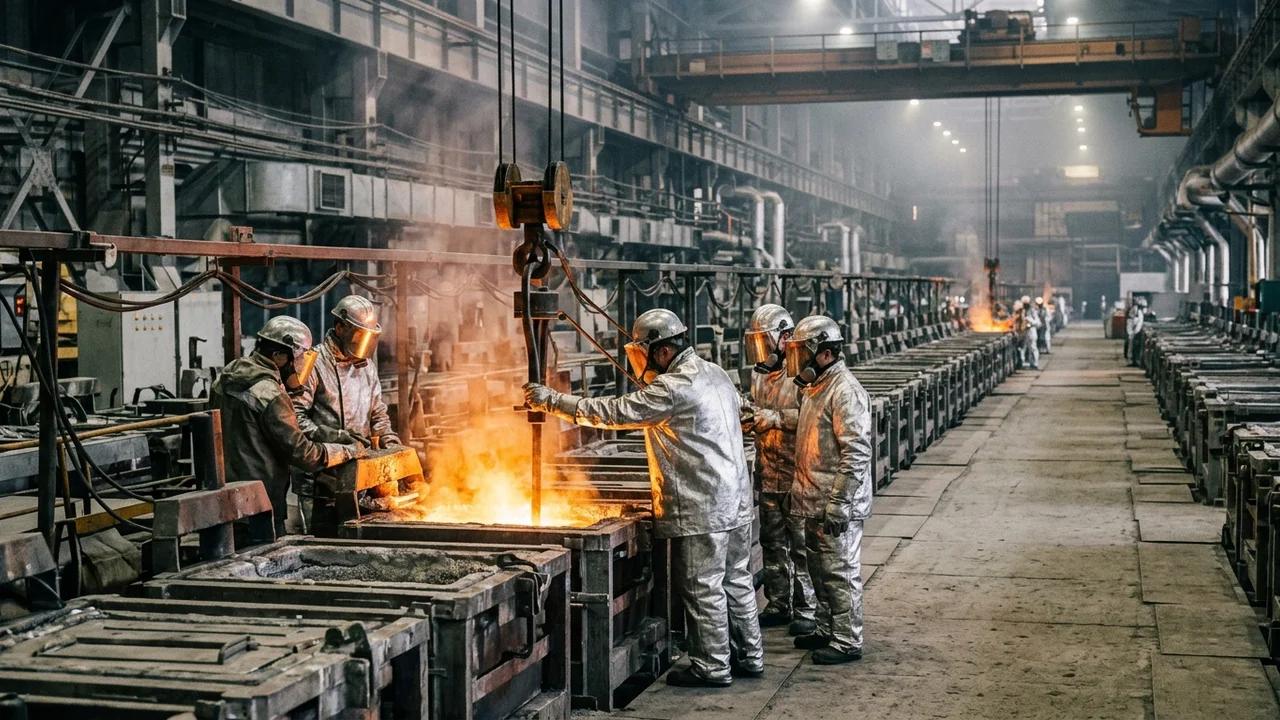
Caption: Primary aluminium smelting under CBAM: only anode-related CO₂ and PFC emissions are priced, not the electricity driving electrolysis.
Why Default Values Punish Primary Aluminium Exporters
Default values are the fallback calculation used when a non-EU installation operator cannot or does not provide verified specific embedded emissions data. For CBAM aluminium exporters relying on defaults, the financial outcome is systematically worse than what actual measurement would deliver.
The default value for primary aluminium embedded emissions is approximately 2.5 tCO₂e per tonne for producers such as those in the UAE, which is significantly above the typical actual direct emission intensity of 1.5 to 2.1 tCO₂e per tonne for modern Hall-Héroult smelters. The mark-up schedule under IR 2025/2621 adds 10% above the calculated default in 2026, 20% in 2027, and 30% from 2028 onward. That means a default value already set above actual performance gets compounded further each year.
The reason defaults overstate actual direct emissions for many producers connects to how they are constructed. Default values incorporate data from the full range of operating facilities, including the least efficient, and the calculation methodology for aluminium includes PFC contributions that vary enormously by installation age and smelting practice. An exporter operating a modern facility with tight anode effect control will have actual direct emissions well below the country-level or global default, but they absorb the same default penalty if they do not submit verified data.
The financial gap widens as CBAM's free allocation phase-out accelerates. In 2026, only 2.5% of the free allocation has been removed, meaning gross CBAM costs are multiplied by a 2.5% CBAM factor for EU importers. By 2030, the factor reaches 48.5%. At that stage, a UAE primary aluminium exporter using defaults versus actual data faces a cost difference of approximately €17 to €34 per tonne, applied to each tonne shipped. The CBAM aluminium guide provides the sector-level CN code breakdown and calculation methodology in full.
Primary vs Secondary Aluminium: Cost Comparison
The CBAM cost divergence between primary and secondary aluminium is the most commercially significant structural difference in the sector. Secondary aluminium, produced by re-melting recycled scrap, carries direct embedded emissions of approximately 0.05 to 0.1 tCO₂e per tonne. That is 15 to 30 times lower than primary aluminium on a direct emissions basis.
The table below compares primary and secondary aluminium across actual emission intensity, default value, and CBAM cost at the current EU ETS reference price of approximately €70 per tonne CO₂e.
| Production type | Actual direct emissions (tCO₂e/t) | CBAM default (tCO₂e/t) | Gross CBAM cost @ €70 (actual) | Gross CBAM cost @ €70 (default) |
|---|---|---|---|---|
| Primary aluminium (Hall-Héroult) | ~1.5–2.1 | ~2.5 (+10% mark-up in 2026) | ~€105–147/t | ~€192/t |
| Secondary aluminium (scrap re-melt) | ~0.05–0.1 | ~0.1 | ~€3.5–7/t | ~€7/t |
Secondary aluminium's near-zero CBAM cost stems from two reinforcing factors. First, recycled scrap is treated as a zero-emissions input: its embedded carbon has already been counted upstream. Second, the energy required to re-melt aluminium is a fraction of what electrolysis requires, meaning even the direct emissions from the re-melting furnace are minimal.
For non-EU exporters, the gap between primary and secondary aluminium CBAM costs creates a structural incentive to increase recycled content in export goods. Each percentage point of scrap substitution in the melt reduces the declared specific embedded emissions. Exporters with documented high scrap rates can use that ratio to claim lower embedded emissions per tonne, provided the calculation follows the methodology in IR 2025/2547.
CBAM Cost Calculation for Aluminium Exporters
The gross CBAM cost formula for aluminium embedded emissions follows the standard calculation: specific embedded emissions (tCO₂e per tonne of goods) multiplied by the EU ETS certificate price (approximately €70 per tonne CO₂e as of late March 2026, though this figure fluctuates with market conditions).
At 1.5 tCO₂e per tonne (primary aluminium, direct only, actual data), the gross cost is €105 per tonne. At the 2026 default of approximately 2.5 tCO₂e per tonne, the gross cost rises to €175 per tonne before the 10% default mark-up, or approximately €192 per tonne after mark-up. The net cost paid by the EU importer in 2026 is multiplied by the 2.5% CBAM factor, which reduces immediate financial exposure. However, the factor climbs steeply: by 2030 it reaches 48.5%, meaning the full cost differential between actual and default values becomes commercially material.
Non-EU exporters should note that the gross CBAM cost is not a cost they pay directly. The CBAM for non-EU exporters page explains the legal structure: the obligation to surrender certificates falls on the EU authorized declarant. The exporter's exposure is commercial, not legal. EU buyers faced with higher CBAM costs from suppliers unable to provide verified emissions data renegotiate purchase prices downward or substitute to lower-emission suppliers.
What Non-EU Aluminium Exporters Must Provide
Non-EU aluminium installation operators have no direct legal obligation under CBAM. The commercial reality requires engagement regardless. EU importers need specific embedded emissions data from the production installation to avoid punitive default values. Exporters who provide verified data give their EU buyers a cost advantage over competitors relying on defaults.
The data requirements for aluminium installations under IR 2025/2547 cover four areas. First, installation identification: full legal name, physical address, UN/LOCODE, and coordinates of the production facility. Second, production route classification: Hall-Héroult is the standard route for primary aluminium; the monitoring plan must define system boundaries. Third, specific direct embedded emissions: tonnes CO₂e per tonne of aluminium produced, calculated using either the calculation-based method (activity data multiplied by emission factors from laboratory analyses) or the mass balance method. Fourth, PFC reporting: CF₄ and C₂F₆ emissions measured and converted to CO₂e using the applicable GWP factors.
The two strategic options for aluminium exporters are listed below.
- Submit verified actual data via the CBAM Operators Portal: reduces the EU importer's CBAM cost, eliminates the default mark-up, and directly protects the export price. Verification by an accredited third-party verifier (under EN ISO/IEC 14065) requires a physical site visit in the first period.
- Accept default values: no upfront cost, but the importer uses the marked-up default, passes the extra cost back as a lower purchase price, and the disadvantage compounds from 2027 as the mark-up increases to 20% and then 30%.
Exporters who complete the CBAM Operators Portal registration and upload verified installation data make that data available to all EU buyer relationships simultaneously. A single verification exercise serves multiple importer accounts.
Which Countries Are Most Affected
CBAM aluminium exporters face different levels of exposure depending on their energy mix and production technology. The 2024 Eurostat trade data identifies the largest non-exempt suppliers of aluminium to the EU by value.
Norway (€4.4 billion) and Iceland (€2.1 billion) are exempt from CBAM under the EEA agreement and EU ETS participation. Switzerland (€1.7 billion) is exempt under the linked ETS arrangement. These three account for the majority of EU aluminium imports and face zero CBAM liability.
Of the non-exempt suppliers, China exports approximately €3.9 billion of aluminium-related goods to the EU annually. China is the world's largest primary aluminium producer, and detailed analysis of CBAM's impact on Chinese producers is covered in the CBAM China article. China expanded its national ETS to cover aluminium in March 2025, but the current price of approximately $11 per tonne CO₂ means any Article 9 deduction (which allows EU importers to offset carbon costs already paid in the country of production) would cover only a fraction of CBAM liability at €70 per tonne.
Turkey exports approximately €2.8 billion of aluminium goods to the EU. Turkey's pilot ETS launched in 2026 with full free allocation, meaning no effectively paid carbon price exists for Article 9 deduction purposes yet. The UAE (EGA) and Bahrain (ALBA) are significant suppliers of unwrought primary aluminium and face CBAM on their direct emissions at gas-grid carbon intensities.
Caption: CBAM aluminium: Norway, Iceland, and Switzerland are exempt. China, Turkey, UAE, and Bahrain are the largest liable exporters.
What Happens to Exporters Who Use Default Values
Aluminium exporters relying on default embedded emissions data face a growing cost penalty that follows a defined trajectory under Regulation (EU) 2025/2083 and IR 2025/2621.
How the Default Mark-Up Escalates
The default mark-up for aluminium (as well as steel, cement, and hydrogen) increases on the following schedule.
- 2026: 10% above the calculated base default
- 2027: 20% above the calculated base default
- 2028 and beyond: 30% above the calculated base default
At a base default of approximately 2.5 tCO₂e per tonne and a €70 ETS price, the 30% mark-up from 2028 adds approximately €52.50 per tonne in additional gross CBAM cost compared to the base default, and approximately €87.50 per tonne above what a producer with actual direct emissions of 1.5 tCO₂e would pay. Multiplied by the growing CBAM factor (10% in 2028), the net additional cost to the EU importer from relying on defaults rather than actual data reaches approximately €8.75 per tonne in 2028, rising to approximately €42.40 per tonne by 2030. Those costs are renegotiated into lower purchase prices paid to the exporter.
Is There Any Case for Accepting Default Values?
One narrow exception exists in 2026 specifically. Due to how the free allocation adjustment interacts with default benchmarks in the first year of the definitive phase, CBAM liability under default values can in some cases be marginally lower than under actual values for certain product configurations. This reverses completely from 2027 onward. Exporters should not plan a default-acceptance strategy on the basis of 2026 data.
Frequently Asked Questions: CBAM Aluminium Exporters
Does CBAM price the electricity used in aluminium smelting?
No. CBAM aluminium covers only direct emissions and perfluorocarbons. Indirect emissions from electricity consumption are excluded because aluminium is listed in Annex II of Regulation (EU) 2023/956. EU aluminium producers receive state aid compensation for indirect carbon costs under the ETS Directive, and including indirect CBAM costs while maintaining that compensation would create an asymmetry. The Commission has flagged this for a future review, but no proposal exists as of April 2026.
What PFCs are included in CBAM aluminium calculations?
Two perfluorocarbons are included: CF₄ (tetrafluoromethane) with a GWP of 6,630, and C₂F₆ (hexafluoroethane) with a GWP of 11,100. Both are expressed as CO₂e and added to direct CO₂ in the specific embedded emissions calculation. PFC emissions arise from anode effect events during Hall-Héroult electrolysis.
Is secondary (recycled) aluminium exempt from CBAM?
Secondary aluminium is not exempt, but its CBAM cost is near-zero. Recycled scrap is treated as a zero-emissions input, and the re-melting process produces approximately 0.05 to 0.1 tCO₂e per tonne of finished metal. At a €70 ETS price, the CBAM cost on secondary aluminium is approximately €3.50 to €7 per tonne gross, before the 2.5% CBAM factor in 2026.
Are Norwegian aluminium exporters affected by CBAM?
No. Norway is exempt from CBAM under the EEA agreement, which means Norwegian aluminium producers participate in the EU ETS directly and are treated as internal market producers. Norway is the second-largest aluminium supplier to the EU by value (approximately €4.4 billion annually) but carries zero CBAM liability.
What is the CBAM default value for primary aluminium?
The base default embedded emissions value for primary aluminium from the UAE, based on IR 2025/2621 estimates, is approximately 2.5 tCO₂e per tonne. A 10% mark-up applies in 2026, raising the effective default to approximately 2.75 tCO₂e per tonne. Country-specific and product-specific defaults apply depending on the exporting country's production mix. The CBAM default values for exporters page covers the full default calculation methodology and mark-up schedule.
Does China's ETS give Chinese aluminium exporters an Article 9 deduction?
Not currently. China expanded its national ETS to cover aluminium in March 2025, but the system operates on an intensity-based basis at approximately $11 per tonne CO₂. Article 9 of Regulation (EU) 2023/956 allows a deduction for carbon prices effectively paid in the country of origin, but intensity-based systems that may issue free allocations exceeding actual emissions do not straightforwardly qualify. The Commission assessment of China's ETS for Article 9 purposes remains pending as of April 2026.
Supplementary: CBAM Aluminium vs CBAM Importers
How Does CBAM Affect EU Importers of Aluminium?
EU importers of CBAM aluminium bear the legal obligation, including authorization as a CBAM declarant, certificate purchase, and annual declaration by September 30, 2027 for calendar year 2026. The CBAM aluminium importers guide covers the full importer compliance chain.
What CN Codes Does CBAM Aluminium Cover?
CBAM aluminium covers CN codes in Chapter 76, including 7601 (unwrought aluminium, both not alloyed and alloys), 7603 (aluminium powders and flakes), 7604 (bars, rods, profiles), 7605 (wire), 7606 (plates, sheets, strip exceeding 0.2 mm), 7607 (foil up to 0.2 mm), 7608 (tubes and pipes), 7609 (fittings), 7610 (structures and parts), and 7616 (other articles). Waste and scrap (7602) are excluded from CBAM scope and receive zero-rated treatment.
How Does CBAM Aluminium Compare to CBAM Steel?
Both aluminium and steel are Annex II goods: only direct emissions are priced, not indirect electricity. Steel covers CO₂ only; aluminium adds PFCs. The key operational difference is that aluminium smelting is far more electricity-intensive than steelmaking, making the indirect exclusion proportionally more significant for aluminium. For steel producers, the electricity exclusion matters less because process emissions from coke combustion dominate the direct emission total.