EU CBAM data requirements determine whether your EU buyers pay standard certificate costs or punitive default-value markups of 10–30% above the country average. Non-EU producers in steel, cement, aluminium, and fertilizers face a direct commercial consequence from data provision: EU importers who cannot obtain specific embedded emissions data from their suppliers are forced to use default values under Implementing Regulation (EU) 2025/2621, and those extra costs flow back to the exporter as lower purchase prices or lost contracts. This guide covers exactly which data points EU buyers need from you, what format each one takes, which third-party verifier requirements apply, and how the CBAM Operators Portal enables a single data upload to serve all your EU customer relationships simultaneously.
What CBAM Data Does an EU Buyer Actually Need from a Non-EU Producer?
EU importers need installation-level specific embedded emissions (SEE), expressed in tonnes of CO₂e per tonne of product, calculated using the EU methodology in IR (EU) 2025/2547. This single number, the SEE, is what appears in the annual CBAM declaration the importer submits to their competent authority by September 30, 2027, covering calendar year 2026 imports. Without a verified SEE from you, the importer applies the country-specific default value for your product, marked up by 10% in 2026, 20% in 2027, and 30% from 2028 onward.
The SEE calculation is not a rough estimate. The EU methodology requires activity data, emission factors derived from laboratory analyses, and a documented monitoring plan. The EU CBAM guide explains how the certificate obligation connects to each tonne of CO₂e embedded in imported goods, and why the production-level data is the foundation of the entire system.
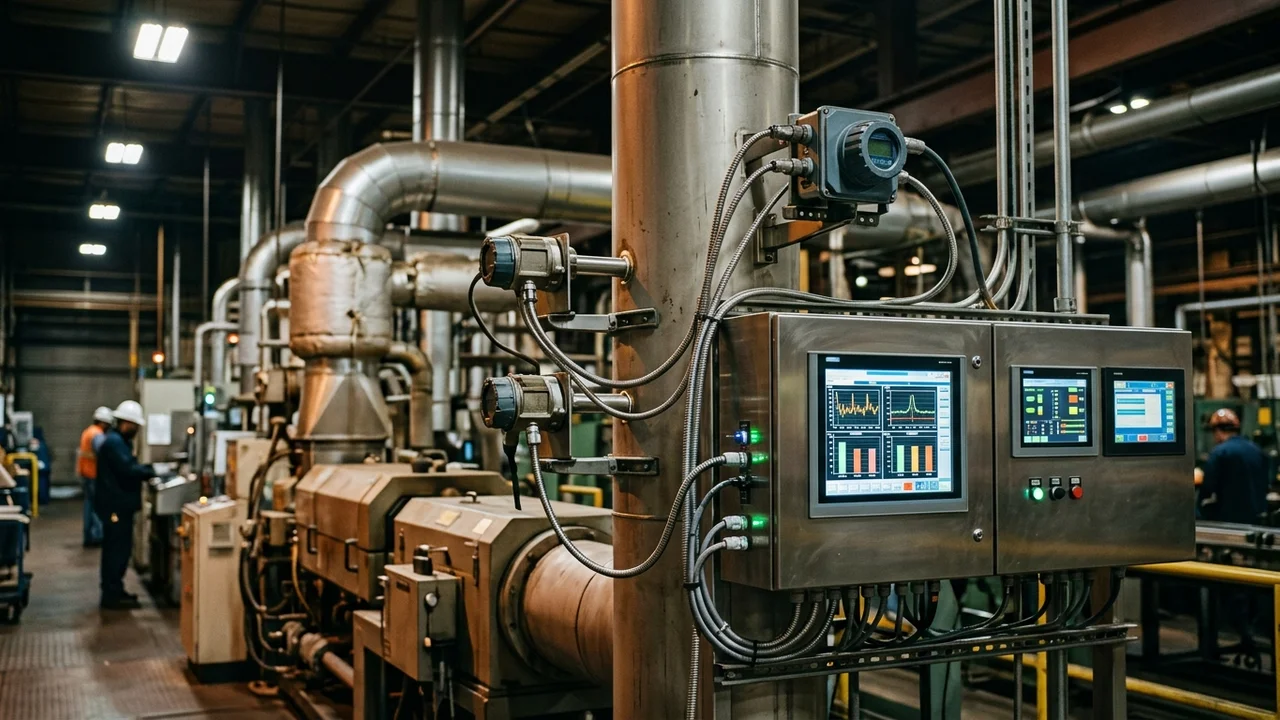
Caption: CBAM data originates at the production installation and flows to the EU authorized declarant for inclusion in the annual CBAM declaration.
The 6 Categories of CBAM Data EU Importers Need from Exporters
Six categories of production-level data are required under IR (EU) 2025/2547 and the CBAM Communication Template. The table below maps each category to the relevant sectors and source documents.
| Data Type | Format | Required for Which Sectors | Source Requirement |
|---|---|---|---|
| Installation identification | Legal name, UN/LOCODE, GPS coordinates | All sectors | Company registration + coordinates |
| Production route | Commission-defined route code (e.g., BF-BOF, EAF, dry-process cement) | All sectors | Operator declaration |
| Activity data | Fuel consumption (TJ or GJ), electricity (MWh), raw material inputs (tonnes) | All sectors | Meter readings, invoices, lab analyses |
| Specific direct embedded emissions | tCO₂e per tonne of product (Equation 11 or 12, IR 2025/2547) | All sectors | Calculation workbooks per IR methodology |
| Specific indirect embedded emissions | tCO₂e per tonne of product (electricity consumption × grid emission factor) | Cement and fertilizers only | Grid emission factor documentation |
| Carbon price paid (Article 9) | €/tCO₂e effectively paid, scheme name, legal basis, payment evidence | All sectors where local carbon pricing exists | Tax assessments, ETS registry records |
Installation Identification Data
Installation identification is the foundational layer of CBAM data. EU importers submit your facility's details at the declaration level, so the data must be legally precise. The four required identification fields are the full legal company name, the physical address of the production installation (not the commercial office), the UN/LOCODE for the installation's city or port, and GPS coordinates (latitude and longitude to four decimal places). Steel producers supply an additional field: the steel mill identification number used in the EU's production tracking systems. One contact person for CBAM queries is also required per installation.
Production Route and Activity Data
Production route determines which emission calculation equations apply to your installation. The EU Commission defines specific production routes for each sector: blast furnace-basic oxygen furnace (BF-BOF) and electric arc furnace (EAF) for steel; dry-process with preheater stages for cement; Hall-Heroult process for primary aluminium; Haber-Bosch synthesis for ammonia and fertilizers. Activity data covers the full reporting period, including total production volume in tonnes, fuel consumption by fuel type in terajoules, electricity consumption in megawatt-hours, and raw material inputs in tonnes. Each data point requires a documented source: sub-meter readings, fuel delivery invoices, or raw material purchase records.
Specific Direct Embedded Emissions
Specific direct embedded emissions are calculated using one of two methods defined in IR (EU) 2025/2547. The calculation-based method (Equation 11) multiplies activity data by fuel-specific emission factors derived from laboratory analyses of the fuels used at your installation. The mass balance method (Equation 12) calculates embedded carbon by measuring carbon inputs (fuels, raw materials) minus carbon outputs (products, waste streams, off-gases). Both methods require a monitoring plan: a formal document describing system boundaries, measurement instruments, calibration schedules, and the procedure for handling missing data. From 2026 onward, no "alternative methods" based on third-country data are accepted; only the full EU methodology in IR (EU) 2025/2547 applies.
Specific Indirect Embedded Emissions
Specific indirect embedded emissions are required only for cement and fertilizer producers, because indirect emissions (from electricity consumption) are priced under EU CBAM for those two sectors. For a cement plant in Egypt or a fertilizer producer in Russia, the calculation covers the electricity consumed per tonne of output, multiplied by the grid emission factor for the country or the specific emission factor of the power source if the plant uses a dedicated renewable supply. Steel and aluminium producers are not financially liable for indirect emissions under CBAM, though some EU buyers may request this data voluntarily for their own scope 3 reporting.
Carbon Price Data for Article 9 Deductions
Carbon price data enables the EU importer to claim an Article 9 deduction, reducing their CBAM certificate obligation by the amount of carbon cost already paid in the country of production. The deduction applies only to legally binding carbon pricing schemes, such as a functioning emissions trading system or a statutory carbon tax, where the carbon price was actually paid and is not offset by free allocations, rebates, or state compensation. Exporters providing this data must supply the gross carbon price per tonne CO₂e paid, the name of the scheme, its legal basis in domestic law, and documented evidence of payment (tax assessment records or ETS registry records). Voluntary carbon offsets, internal corporate carbon prices, and indirect energy subsidies are explicitly excluded and provide no Article 9 credit.
Precursor Data: When Your Inputs Are Also CBAM Goods
Precursor data is required whenever the goods you export use other CBAM-covered goods as inputs. The three most commercially significant precursor chains in EU CBAM are clinker within cement production, ammonia within urea fertilizer production, and unwrought aluminium within aluminium profiles and extrusions. For each precursor, you must provide the specific embedded emissions of that input from the upstream installation, the mass allocation methodology used to attribute embedded emissions to the precursor volume consumed, and, if the precursor came from a different installation, that installation's verified data as well. EU importers cannot complete the CBAM declaration for complex goods without the full precursor chain documented.
How Data Reaches the EU Importer: The CBAM Operators Portal
EU importers receive CBAM data through one of two channels: direct transmission from the exporter via signed declaration, or upload to the CBAM Operators Portal by the installation operator. The CBAM operators portal is the European Commission's dedicated platform for non-EU installation operators to upload verified emissions data, where it becomes accessible to all authorized EU declarants who import from that installation. This is the more efficient route for producers with multiple EU buyers: one upload of verified data serves every importer relationship simultaneously without requiring repeated data transfers.
The portal provides an official Communication Template, an Excel matrix that maps your installation's energy flows, activity data, and emission calculations to the required CBAM fields. Video training modules in English, German, French, Spanish, and Turkish are available through the portal. Data uploaded directly by the operator can be pre-verified by a third-party verifier before transmission, which removes the verification burden from the importer and strengthens the commercial relationship.
Caption: The CBAM Operators Portal allows a single verified data upload to serve all EU customer relationships for a given installation.
Verification: Who Checks the Data and What They Examine
Verified embedded emissions data is accepted under CBAM; unverified data carries higher rejection risk during competent authority checks. Third-party verification is conducted by an accredited verifier, accredited under EN ISO/IEC 14065 by a National Accreditation Body that holds mutual recognition with European Accreditation (EA). Chinese, Indian, Turkish, and Egyptian verifiers can operate through local NABs with EA mutual recognition agreements, allowing in-country verification without sending a European auditor to your facility.
For 2026 imports (the first definitive-phase year), a physical site visit to the production installation is mandatory. The verifier walks through the facility, observes key production processes, examines measurement instruments, reviews calibration records, and samples activity data against source documentation. What verifiers specifically check covers five areas: accuracy of activity data against fuel and electricity invoices, appropriateness of emission factors from laboratory analyses, correctness of the calculation methodology against IR (EU) 2025/2547, completeness of the monitoring plan and system boundaries, and consistency with prior-period data where available. The verification report states whether the declared SEE gives a true and fair view of actual embedded emissions, with any material misstatements explicitly flagged.
Verifier fees range from €5,000 to €50,000 per installation per reporting period, depending on installation complexity, number of production routes, and travel requirements. This is a one-time investment per period that eliminates the 10–30% default value markup applied to your EU buyers' costs.
What Happens to EU Buyers Who Cannot Get Data from You
EU importers who cannot obtain specific embedded emissions data use default values published by the European Commission under IR (EU) 2025/2621. Default values are set at the country-specific average emission intensity for each product type, then marked up. The markup schedule increases costs for your EU buyers progressively over time.
The financial gap between default and actual data is not trivial for high-volume producers. A Turkish cement producer with actual emissions of approximately 0.88 tCO₂/t against a country default of approximately 1.584 tCO₂/t carries a gap of roughly 0.70 tCO₂/t. At a 48.5% CBAM factor in 2030 and a €70/tCO₂ ETS price, that gap costs the EU importer approximately €24 per tonne — on a product that may sell for €60–80/t FOB. EU buyers increasingly pass this cost back to producers through lower purchase prices or, where substitute suppliers with verified data are available, by switching suppliers. For more on what happens when actual data is absent, the CBAM default values for exporters guide covers the calculation methodology, country defaults by product, and the compounding effect of the markup schedule through 2028.
CBAM Data Requirements: Frequently Asked Questions
Do non-EU exporters have a legal obligation to provide CBAM data?
No. Non-EU exporters have no direct legal obligation under Regulation (EU) 2023/956. The legal obligation belongs entirely to the EU authorized declarant (the importer). The commercial obligation exists because EU importers who cannot obtain verified data from you face higher costs, which they recover by negotiating lower prices from you or switching to suppliers who do provide data.
Is the transitional period data I collected still valid for the definitive phase?
No. Alternative calculation methods permitted during the transitional period (October 2023 to December 2025) under IR (EU) 2023/1773 are no longer accepted. From 2026, only the full EU methodology defined in IR (EU) 2025/2547 applies. Transitional period reporting experience is useful as a baseline, but the calculation workbooks and monitoring plans must be rebuilt to comply with the definitive-phase requirements.
Can one upload to the CBAM Operators Portal cover all my EU buyers?
Yes. The CBAM Operators Portal allows installation operators to upload verified embedded emissions data once, then authorize specific EU declarants to access it. This makes the portal particularly efficient for producers who export to 3 or more EU importers from the same installation.
Which sectors require indirect emissions data?
Cement and fertilizer producers must provide specific indirect embedded emissions data. Steel, aluminium, hydrogen, and electricity producers are not financially liable for indirect emissions under CBAM. Steel and aluminium producers were required to report indirect emissions during the transitional period for statistical purposes only; that obligation did not carry into financial liability in the definitive phase.
What if our country has a carbon pricing scheme?
Carbon pricing data enables the EU importer to apply an Article 9 deduction that reduces their CBAM certificate obligation. The scheme must be legally binding and effectively enforced, not a voluntary or shadow pricing arrangement. South Korea's K-ETS is under active Commission assessment for Article 9 recognition. South Africa's Carbon Tax Act is also being assessed. Turkey, China, India, and Egypt do not currently have qualifying schemes as of April 2026, so their exporters cannot support an Article 9 deduction.
Who Needs CBAM Data and How Much Does It Cost to Not Provide It
The CBAM exporters hub provides full strategic context for non-EU producers, but the data requirement question has a concrete financial answer. The cost of not providing data is the default markup passed back by EU buyers: 10% above the country average in 2026, 20% in 2027, and 30% from 2028. For high-emission production routes, the country-average default is already above actual emissions at well-run facilities, so the markup compounds an already unfavorable baseline.
Does CBAM apply if my EU customer buys less than 50 tonnes per year?
The de minimis threshold exempts EU importers who purchase fewer than 50 tonnes per year of CBAM goods across all CBAM product types. The threshold applies at the importer level, not the supplier level. An EU buyer purchasing 40 tonnes per year total from all non-EU CBAM suppliers has no CBAM obligation and needs no data from you. An EU buyer purchasing 5,000 tonnes per year must comply regardless of how many suppliers it uses, and requires verified embedded emissions data from each one.
What is the connection between embedded emissions and CBAM certificates?
CBAM certificates correspond to embedded CO₂e in the goods imported. The CBAM embedded emissions article explains how embedded emissions are defined under Article 3(4) of Regulation (EU) 2023/956, how direct and indirect emissions are scoped by sector, and how the specific embedded emissions figure maps to certificate quantities. For exporters, the direct connection is that every tonne of CO₂e in your declared SEE becomes one certificate surrendered by your EU buyer, at approximately €70/tCO₂ as of late March 2026. Accurate, verified data that reflects actual lower-than-default emissions directly reduces that certificate count.