A CBAM verifier costs between €5,000 and €50,000 per production installation, and every EU importer using actual embedded emissions data must engage one before the September 30, 2027 declaration deadline. Verifier registration in the CBAM Registry opens September 1, 2026, which gives accredited firms just 13 months to conduct site visits across thousands of non-EU facilities in China, India, Turkey, the UAE, and Egypt. EU importers who wait until late 2026 to identify a verifier face genuine availability risk. This guide covers who qualifies to act as a CBAM verifier, how costs are structured, and what questions to ask before signing an engagement.
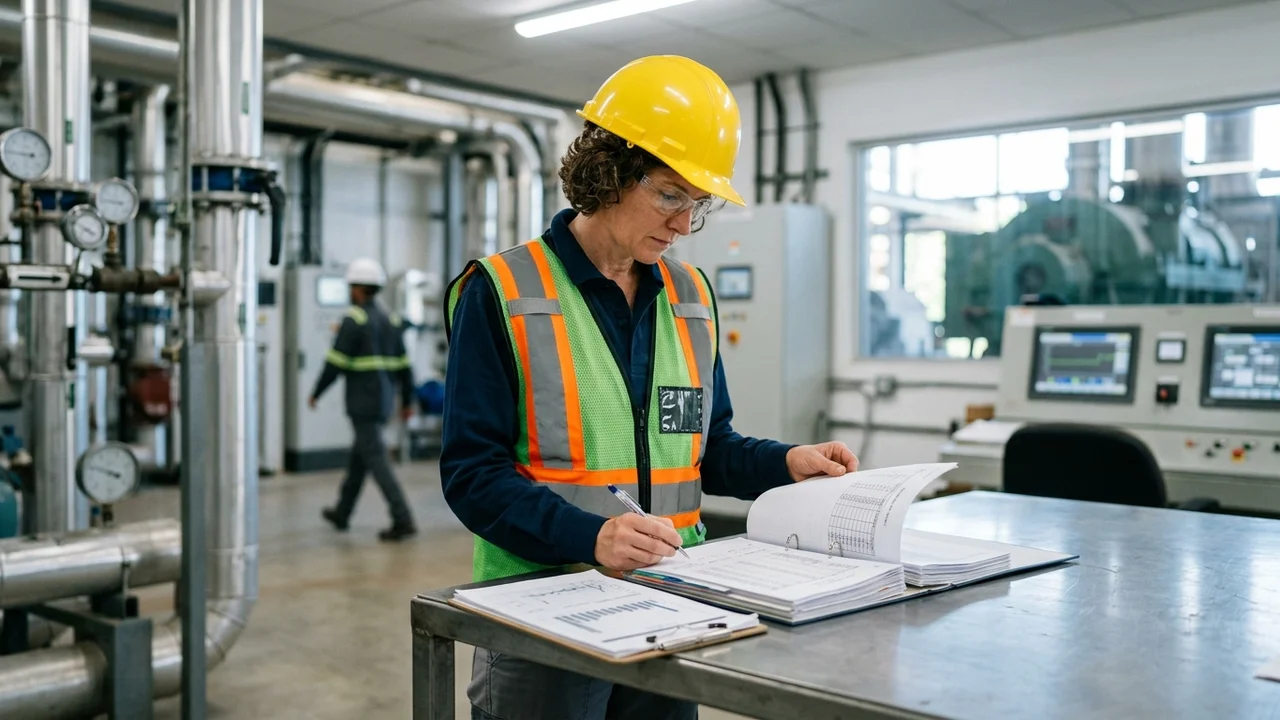
Caption: For the first verification period (calendar year 2026), a physical site visit to the non-EU production installation is mandatory under Delegated Regulation (EU) 2025/2551.
What Is a CBAM Verifier and When Do You Need One?
A CBAM verifier is a third-party body accredited under EN ISO/IEC 14065 by a National Accreditation Body (NAB) recognized by European Accreditation (EA), authorized to confirm that the specific embedded emissions reported in a CBAM declaration match the actual production data from the installation that made the goods. The legal basis sits in Delegated Regulation (EU) 2025/2551 (accreditation standards) and Implementing Regulation (EU) 2025/2546 (verification principles and report requirements).
Verification is required only when an EU importer uses actual values rather than default values for embedded emissions. The distinction matters financially. Importers who rely entirely on the Commission's default values published in Implementing Regulation (EU) 2025/2621 do not need a verifier at all. Default values carry punitive mark-ups (10% above the calculated default in 2026, rising to 30% from 2028), so most importers sourcing from lower-emission producers have a financial incentive to use actual values and absorb the verification cost.
Under the EU carbon border adjustment mechanism, embedded emissions represent the total CO₂e released during the manufacturing process at the exporter's facility. These are the values that determine how many CBAM certificates an EU importer must surrender. Verification ensures those values are accurate.
CBAM Verification Cost by Scope and Installation Complexity
CBAM verification cost ranges from €5,000 for a simple, single-product installation to €50,000 for a large, multi-product facility with complex production routes and multiple GHGs to monitor. The 5 primary cost drivers are listed below.
The cost drivers that determine where your engagement falls within that range are listed below:
- Installation size and geographic location: A steel mill in Turkey with 2 production furnaces costs less to verify than a fertilizer complex in Russia with 8 process units. Long-haul flights and multi-day stays add directly to verifier fees.
- Number of products and production routes: Facilities producing both Portland cement and clinker under different CN codes require separate calculations per product line.
- GHGs covered: Aluminium installations emit both CO₂ and perfluorocarbons (CF₄ and C₂F₆, with global warming potentials of 6,630 and 11,100 respectively), requiring additional measurement protocols.
- Monitoring plan maturity: An installation with a documented, audited monitoring plan in place reduces verifier time significantly compared to facilities building one from scratch.
- First vs. subsequent verification period: The first verification period for calendar year 2026 requires a mandatory physical site visit. Remote or document-only verification is not permitted under DR 2025/2551. Subsequent periods may allow partial remote review once the site baseline is established.
The table below shows indicative cost ranges by installation type. These are estimates based on market data as of April 2026 and vary by verifier firm and geography.
| Installation Type | Complexity | Indicative Verification Cost |
|---|---|---|
| Single product, simple process (e.g., steel rebar, EAF route) | Low | €5,000–€12,000 |
| Single product, moderate complexity (e.g., Portland cement) | Medium | €12,000–€25,000 |
| Multi-product, multi-route (e.g., steel hot-rolled + cold-rolled + coated) | High | €25,000–€40,000 |
| Large fertilizer or aluminium complex, multiple GHGs | Very High | €40,000–€50,000 |
| Multiple installations, same verifier engagement | Volume discount | Negotiated; often 15–25% below per-unit rate |
An EU importer sourcing from 10 production installations of medium complexity faces verification costs of €120,000 to €250,000 for the first cycle. Large importers with 50 or more installations face potential first-cycle costs exceeding €2 million.
How to Find an Accredited CBAM Verifier
Verifiers cannot be registered in the CBAM Registry until September 1, 2026. No central EU-published list of qualified CBAM verifiers exists as of April 2026. The 4 practical channels for identifying candidates are described below.
The practical channels for identifying CBAM verifier candidates are described below:
- National Accreditation Bodies (NABs): Each EU member state's NAB maintains a public register of accredited verification and validation bodies (VVBs) under ISO 14065. Contact your country's NAB directly. Key bodies include DAkkS (Germany), COFRAC (France), RvA (Netherlands), and ACCREDIA (Italy).
- European Accreditation (EA) database: EA publishes a searchable directory of member NABs and their accredited bodies at european-accreditation.org. Filter by accreditation scope to find bodies with environmental information verification credentials.
- EU ETS verification market: Verifiers currently accredited to conduct EU ETS installation verification under EN ISO 14065 are the most likely candidates for CBAM verification, as the accreditation standard overlaps substantially. The European Commission has signaled these bodies will form the core CBAM verifier pool.
- CBAM compliance consultancies: Firms offering CBAM compliance advisory services (Big 4 accounting firms, specialist carbon consultancies, and trade compliance advisors) are building verification capability or partnering with accredited bodies. These can act as coordination layers for importers managing high installation counts.
Engage candidates now, before verifier registration opens in September 2026. Demand will concentrate in Q4 2026 and Q1 2027 as the September 30, 2027 declaration deadline approaches.
What a CBAM Verifier Checks: The Verification Scope
CBAM verification covers 5 core areas at the production installation. The verification scope under IR 2025/2546 is structured around these areas:
- Activity data accuracy: Production volumes, fuel consumption, input material weights, and any process-specific data used in the embedded emissions calculation.
- Emission factor appropriateness: Whether the emission factors applied (default or measured) correctly correspond to the production route in use at the installation.
- Calculation methodology: Whether the formulas used to derive specific embedded emissions per tonne of goods comply with IR 2025/2547.
- Monitoring plan compliance: Whether the installation's monitoring plan is documented, implemented, and consistently followed.
- Completeness: Whether all relevant emission sources and GHGs are captured, including indirect emissions for cement and fertilizer installations.
For the first verification period (calendar year 2026 imports), the verifier must conduct a physical site visit that includes a facility walk-through, process observation, document review, and data sampling. The visit is not optional and cannot be substituted by video inspection under DR 2025/2551. The verifier then issues a verification report meeting the standard in IR 2025/2546, which the EU importer attaches to the annual CBAM declaration due September 30, 2027.
The concept of CBAM verification and its interaction with the embedded emissions calculation framework is covered in the compliance hub for importers who need the underlying methodology detail.
Caption: Verification scope under IR 2025/2546 covers activity data, emission factors, methodology, monitoring plan compliance, and completeness.
What to Ask a CBAM Verifier Before You Hire
The 8 questions below separate qualified CBAM verifiers from firms offering standard ISO 14064-3 verification without CBAM-specific expertise.
Before committing to a verifier engagement, ask these 8 questions:
- Is your accreditation body a member of European Accreditation (EA)? EN ISO/IEC 14065 accreditation through a non-EA-member NAB does not satisfy the CBAM verifier requirement under DR 2025/2551. Confirm this before any other conversation.
- Have you completed the CBAM Registry registration process? Registration opens September 1, 2026. Verifiers who have not registered by the time you submit your declaration cannot be referenced in it.
- Have you conducted CBAM verification for the specific sector (steel, cement, aluminium, fertilizers, electricity, hydrogen)? Each sector has distinct calculation methodologies, production routes, and GHG profiles. Sector experience reduces site visit duration and lowers risk of material misstatement.
- Have you conducted site visits in the relevant country? Travel logistics, language requirements, and local regulatory context all affect delivery timelines.
- What is your firm's capacity for 2026–2027 engagements? The European Accreditation Task Force on CBAM was only established in March 2026. Verifier capacity across the EU is genuinely constrained. Ask for confirmed availability, not estimated availability.
- What does the verification report cover, and does it meet the standard in IR 2025/2546? Request a sample redacted report from a comparable installation.
- How do you handle scope 2 emissions for cement and fertilizer installations? These sectors require indirect embedded emissions (electricity consumption) to be verified, which adds complexity most EU ETS verifiers have not previously handled.
- What is your professional liability position for material misstatements? Under DR 2025/2551, verifiers bear professional liability for incorrect verification reports. Ask how they handle disputed findings and what insurance coverage applies.
The Contextual Border: What Happens If You Cannot Find a Verifier?
The verification capacity gap is one of the most serious operational risks in CBAM compliance for 2026 and 2027. The regulation provides no force majeure clause, no good-faith waiver, and no exemption for importers who cannot locate an accredited verifier for a specific country or installation type. An EU importer in this position faces only one legal alternative: use default values.
Default values under IR 2025/2621 carry a 10% mark-up in 2026 for all sectors except fertilizers. The financial impact varies sharply by sector. For Chinese BF-BOF steel, the Commission default value is 3.167 tCO₂e per tonne, compared to typical actual values of approximately 2.0 tCO₂e per tonne. At the current EU ETS price of approximately €70/tCO₂, an importer forced onto defaults for 10,000 tonnes of Chinese steel pays certificates on 3.167 × 10,000 × 1.10 = 34,837 tCO₂ rather than 20,000 tCO₂ under actual values. The verification cost (estimated at €10,000–€25,000 for a single medium-complexity installation) is clearly the lower-cost path at meaningful import volumes.
The CBAM compliance for importers hub covers the full obligation chain, including authorization, registry access, quarterly certificate holding, and declaration filing, for EU importers building out their end-to-end compliance program.
Do Importers Using Default Values Need a Verifier?
Importers using default values do not need a CBAM verifier. Verification is required only for actual embedded emissions data. Using defaults removes the verification requirement entirely. The tradeoff is that defaults are calibrated to be financially punitive relative to actual values at most import origins, particularly from 2027 onward when the default mark-up increases to 20%.
How Does the Verifier Independence Requirement Work?
A CBAM verifier must be independent of the production installation being verified and must have no financial interest in the compliance outcome. A verifier employed by, jointly owned with, or contracted exclusively to the non-EU producer does not satisfy the independence requirement under DR 2025/2551. EU importers cannot rely on verification commissioned by the exporter alone. The importer must either commission separate independent verification or verify that the exporter's verifier meets the independence standard under the EU regulation.
Can a Non-EU Verifier Conduct CBAM Verification?
Non-EU verifiers can conduct CBAM verification if their accreditation body has a recognized mutual recognition agreement with European Accreditation. The EA network includes accreditation bodies in approximately 37 countries, some outside the EU, including the United Kingdom Accreditation Service (UKAS). A UKAS-accredited verifier with EN ISO/IEC 14065 scope may qualify. Importers using non-EU verifiers should confirm EA mutual recognition status explicitly before engaging.
Can One Verifier Cover Multiple Production Installations?
A single accredited verifier can cover multiple production installations within one engagement. Multi-installation contracts typically attract volume discounts of 15 to 25% relative to per-installation pricing. The verifier issues a separate verification report for each installation, as each report corresponds to a specific production facility referenced in the annual CBAM declaration. Importers with concentrated supply chains at 2 or 3 installations benefit most from this structure.
What Is the Deadline to Engage a Verifier for 2026 Imports?
No formal regulatory deadline governs when an EU importer must engage a verifier. The practical constraint is the declaration deadline: the annual CBAM declaration covering 2026 imports is due September 30, 2027. The verification report must be complete before the declaration is filed. For first-period verifications requiring physical site visits to facilities in Asia, Africa, or the Middle East, planning a 6 to 9 month engagement window from contract signature to report delivery is prudent. That means target engagement by Q4 2026, and ideally by Q3 2026 to secure verifier availability before demand peaks.
For a comprehensive step-by-step view of how how embedded emissions are calculated and how verified actual values interact with certificate surrender obligations, the compliance hub covers the full calculation framework.
The CBAM declaration article covers what the verification report must reference inside the annual declaration and how to complete the certificate surrender at the September 30 deadline.
For a structured walk-through of every step in the importer compliance process, the CBAM compliance checklist provides a sequential obligation guide from authorization through to record-keeping.