CBAM fertilizers carry the highest embedded-emission rate of any solid CBAM good: urea reaches approximately 2.5 tCO₂e per tonne, generating a gross CBAM cost of roughly €175 per tonne at the current EU ETS price of approximately €70/tCO₂ as of late March 2026. Six nitrogen-fertilizer product groups fall under Regulation (EU) 2023/956, each with distinct calculation rules for CO₂ and N₂O. This article covers the full mechanics: which products are covered, how embedded emissions are calculated for ammonia, urea, ammonium nitrate, and UAN, which N₂O emissions count, what default values apply, and how the Russia-driven supply shift shapes the compliance landscape for EU importers today.
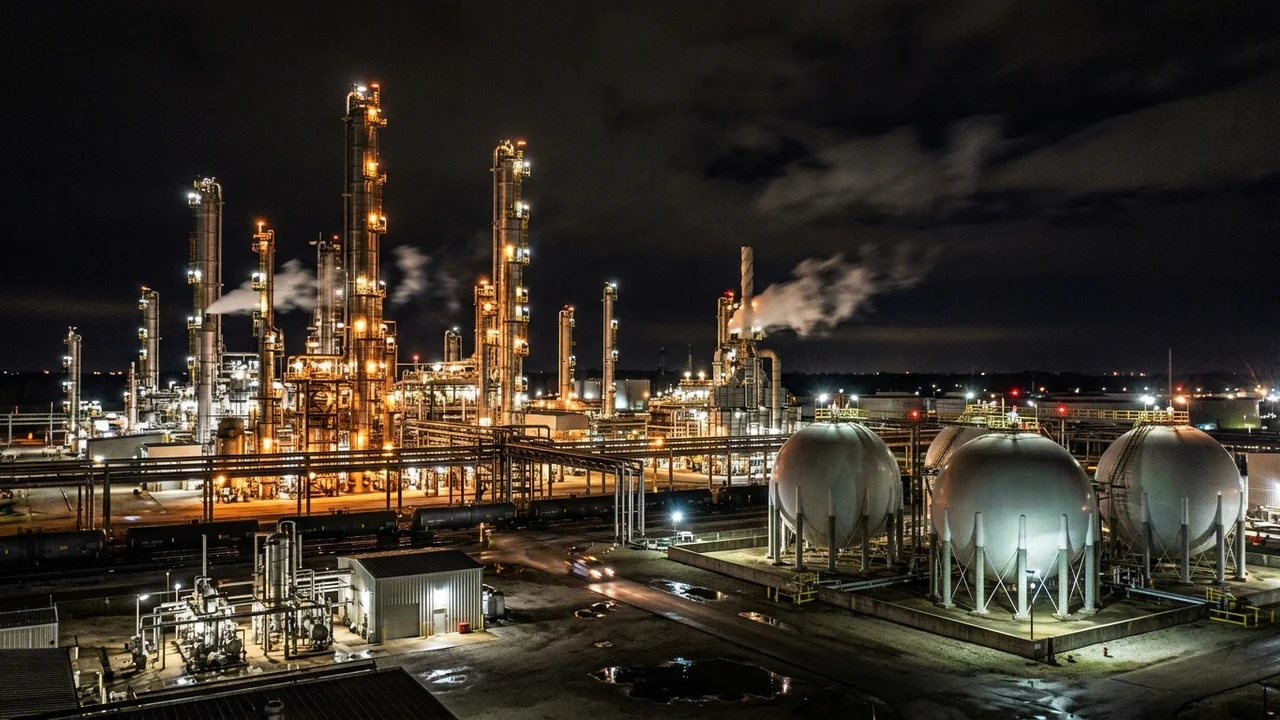
Caption: Urea and ammonia are the two highest-volume nitrogen fertilizer products covered under CBAM Annex I.
What CBAM Covers in the Fertilizer Sector
CBAM applies to nitrogen-containing fertilizer goods imported into the EU from third countries, pricing both direct CO₂ emissions and direct N₂O emissions from their production, alongside indirect electricity-use emissions, under Regulation (EU) 2023/956.
The fertilizer sector is one of only two CBAM sectors (cement being the other) where indirect emissions from electricity consumption are priced alongside direct process emissions. This distinction matters because EU-based fertilizer producers also bear those indirect costs through the EU Emissions Trading System, so including them in CBAM preserves competitive parity. Understanding the full scope requires reviewing the EU CBAM framework before working through product-level calculations. The EU CBAM guide sets out the authorization requirements, certificate obligations, and declaration deadlines that apply to all CBAM sectors, including fertilizers.
Six product families within Chapters 28 and 31 of the EU Combined Nomenclature are listed in Annex I of Regulation (EU) 2023/956. Each family has a different nitrogen content, different production-stage emission profile, and therefore a different embedded-emission factor used in CBAM calculations.
The six covered fertilizer product families and their primary CN codes are listed below.
- Ammonia (anhydrous and aqueous solution): CN codes 2814 10 00 and 2814 20 00
- Nitric acid and sulfonitric acids: CN code 2808 00 00
- Potassium nitrate: CN code 2834 21 00
- Urea (greater than 45% nitrogen by weight): CN code 3102 10
- Ammonium nitrate (AN) and calcium ammonium nitrate (CAN): CN codes 3102 30, 3102 40, and 3102 60
- Mixtures of urea and ammonium nitrate (UAN) and mixed mineral fertilizers containing nitrogen: CN codes 3102 80 and 3105 (excluding 3105 60 00, the phosphorus-potassium-only subheading)
Ammonium sulphate (3102 21) and sodium nitrate (3102 50) are also listed. The common thread across all these products is nitrogen: the CBAM calculation for each is anchored to its nitrogen content expressed in kilograms per tonne of product, as set out in Implementing Regulation (EU) 2025/2547 (Equation 65).
The Haber-Bosch Chain: Where Fertilizer Emissions Come From
Three emission sources drive the CBAM cost for nitrogen fertilizers, and each maps to a different stage of the Haber-Bosch production chain.
The Haber-Bosch process synthesizes ammonia from nitrogen gas and hydrogen: N₂ + 3H₂ → 2NH₃. Virtually all global ammonia production, over 99% by volume, uses hydrogen derived from natural gas via steam methane reforming (SMR): CH₄ + H₂O → CO + 3H₂. The CO₂ released during that reforming step is the primary emission source and accounts for roughly 1.6 to 2.4 tCO₂ per tonne of ammonia produced.
The second source is unique to urea. During urea synthesis, CO₂ captured from the reforming step is reacted with ammonia: CO₂ + 2NH₃ → CO(NH₂)₂ + H₂O. That CO₂ is incorporated into the urea molecule and later released when the product decomposes after field application. CBAM counts this production-stage CO₂ in the embedded emissions of urea, bringing the total emission factor for urea to approximately 2.3 to 2.6 tCO₂e per tonne at standard 46% nitrogen content.
The third source applies specifically to ammonium nitrate (AN), calcium ammonium nitrate (CAN), and UAN: N₂O released during nitric acid production. Without abatement catalysts, nitric acid production emits approximately 6 kg of N₂O per tonne of nitric acid. Using the IPCC AR5 global warming potential of 265 for N₂O, that translates to approximately 1.59 tCO₂e per tonne of nitric acid. Modern plants equipped with secondary and tertiary catalysts reduce N₂O emissions by 80 to 90%, which is why verified actual emissions differ substantially from default values for AN and CAN importers.
One boundary requires emphasis: N₂O emitted from soil when farmers apply nitrogen fertilizers is not included in CBAM scope. Only production-stage N₂O from nitric acid manufacturing counts.
How Embedded Emissions Are Calculated for CBAM Fertilizers
The embedded-emission calculation for CBAM fertilizer products follows the specific rules in Implementing Regulation (EU) 2025/2547, with nitrogen content as the central variable. Knowing how embedded emissions are calculated under the general CBAM methodology provides the foundation; the fertilizer-specific rules then apply on top of that framework.
For ammonia, the calculation is direct: specific embedded emissions equal the total CO₂e from natural gas combustion and process releases during Haber-Bosch synthesis, per tonne of anhydrous ammonia produced. The transitional default from Implementing Regulation (EU) 2023/1773 places anhydrous ammonia at 2.68 tCO₂e per tonne.
For downstream nitrogen products, the calculation uses the ammonia embedded in each product as the precursor emission, then adds product-specific process emissions. A simplified form of the calculation for urea runs as follows: the CO₂e per tonne of urea equals (ammonia embedded emissions × ammonia content per tonne of urea) plus CO₂ incorporated during urea synthesis plus indirect electricity emissions. At a 46% nitrogen content and typical natural gas feedstock efficiency, this yields 2.3 to 2.6 tCO₂e per tonne of urea.
The table below shows the reference emission factors and gross CBAM costs for the main fertilizer products at the current EU ETS price of approximately €70/tCO₂.
| Product | CN Code | Emission Factor (tCO₂e/t) | Gross CBAM Cost @ €70/tCO₂ | Key Emission Source |
|---|---|---|---|---|
| Anhydrous ammonia | 2814 10 00 | ~2.68 (default) / 1.6–2.4 (actual) | ~€112–188/t | Natural gas reforming |
| Urea (46% N) | 3102 10 | ~2.3–2.6 | ~€161–182/t | Reforming CO₂ + urea synthesis CO₂ |
| Ammonium nitrate (AN) | 3102 30 | ~1.5–2.0 | ~€105–140/t | Reforming CO₂ + nitric acid N₂O |
| Calcium ammonium nitrate (CAN) | 3102 40 / 3102 60 | ~1.5–2.0 | ~€105–140/t | Reforming CO₂ + nitric acid N₂O |
| UAN solution (~30% N) | 3102 80 | ~1.0–1.5 | ~€70–105/t | Blend of urea and AN emissions |
| Aqueous ammonia | 2814 20 00 | Proportional to NH₃ content | Lower than anhydrous | Natural gas reforming |
Net costs in 2026 are much lower than these gross figures because free allocation within the EU ETS reduces the effective CBAM obligation. In 2026, the CBAM factor stands at 2.5% (meaning 97.5% of free allocation remains). The net CBAM cost for urea at €70/tCO₂ in 2026 is therefore: 2.5 tCO₂e/t × €70 × 2.5% = approximately €4.38 per tonne. That net cost rises to approximately €90.94 per tonne by 2030, when the CBAM factor reaches 48.5%.
Default Values for CBAM Fertilizer Imports
Default values in CBAM function as a fallback when importers cannot obtain verified actual emissions from their suppliers. For fertilizers, default values carry a mark-up of only 1% above the calculated default, per the schedule in Implementing Regulation (EU) 2025/2621. This contrasts sharply with the 10% mark-up applied in 2026 to steel, cement, aluminium, and hydrogen. The lower mark-up reflects a deliberate policy decision to protect agricultural supply chains and food security considerations.
The practical implication: a urea importer using default values in 2026 pays only 1% more than the calculated default-based cost. This is much less punitive than for other CBAM sectors, so the financial gap between using defaults and obtaining actual verified data is narrower for fertilizers than anywhere else in the CBAM framework.
Default values are still not costless. At 2.5 tCO₂e/t urea and €70/tCO₂, the gross default-based cost is €175/t. Even with only a 1% mark-up, this still represents a meaningful cost once free allocation is phased out. By 2034, when free allocation reaches zero, importers using defaults at a consensus ETS forecast of approximately €126/tCO₂ face gross costs of approximately €315 per tonne of urea. Understanding the CBAM default values methodology prevents importers from mistaking the low 2026 mark-up for a permanent exemption from verification pressure.
The mark-up schedule for fertilizer default values across the implementation period is shown below.
- 2026: +1% above calculated default
- 2027: +1% above calculated default
- 2028 and beyond: +1% above calculated default
For all other CBAM sectors (steel, cement, aluminium, hydrogen), the 2028 mark-up rises to +30%. Fertilizers remain at +1% indefinitely under the current implementing regulation, recognizing the sector's role in global food supply and the practical difficulty of achieving full emissions traceability across complex ammonia supply chains.
The 50-Tonne De Minimis Threshold and Fertilizer Importers
The de minimis threshold under Regulation (EU) 2023/956 as amended by Regulation (EU) 2025/2083 is 50 tonnes of annual mass per importer. Fertilizers qualify for this threshold, unlike electricity and hydrogen, which have no de minimis relief.
For a practical fertilizer importer, 50 tonnes of urea is a small quantity: at market prices, this represents roughly a single truckload. Large-scale importers, such as distributors sourcing thousands of tonnes per season for EU agricultural markets, operate well above the threshold. The threshold is more relevant for niche specialty fertilizer importers or companies that import CBAM goods across multiple sectors and whose fertilizer volumes happen to be marginal. The CBAM de minimis threshold article covers the aggregation rules in full, including how volumes are counted across consignments within a calendar year.
How CBAM Fertilizer Costs Scale from 2026 to 2034
CBAM fertilizer costs are low in 2026 and grow steeply toward 2034. Planning with only 2026 figures produces an incomplete picture because the free allocation phase-out accelerates between 2029 and 2030 more sharply than in any prior year.
The table below shows net CBAM costs for urea at a constant reference ETS price of €75/tCO₂ across key milestone years.
| Year | CBAM Factor | Net CBAM Cost (Urea, €75/tCO₂) | Free Allocation Remaining |
|---|---|---|---|
| 2026 | 2.5% | ~€4.69/t | 97.5% |
| 2027 | 5% | ~€9.38/t | 95% |
| 2028 | 10% | ~€18.75/t | 90% |
| 2029 | 22.5% | ~€42.19/t | 77.5% |
| 2030 | 48.5% | ~€90.94/t | 51.5% |
| 2031 | 61% | ~€114.38/t | 39% |
| 2032 | 73.5% | ~€137.81/t | 26.5% |
| 2033 | 86% | ~€161.25/t | 14% |
| 2034 | 100% | ~€187.50/t | 0% |
These figures use the emission factor of 2.5 tCO₂e/t and assume a constant ETS price. Actual costs vary with ETS market movements. Certificate prices for 2026 are calculated as the quarterly average of EU ETS auction clearing prices per Article 22(1a) of Regulation (EU) 2023/956 as amended by Regulation (EU) 2025/2083.
Caption: The 2029–2030 transition represents the steepest single-year cost increase in the CBAM phase-in schedule for fertilizer importers.
Russia, Egypt, and the Shifting Source Map for EU Nitrogen Fertilizers
The CBAM fertilizer supply landscape is inseparable from the geopolitical shift that preceded full CBAM implementation. Russia and Belarus historically supplied approximately 34% of EU nitrogen fertilizer imports, with Russian producers EuroChem and PhosAgro holding dominant positions in urea and ammonium nitrate supply.
The additional EU tariff enacted in July 2025 compounded the existing 6.5% ad valorem customs duty on Russian fertilizers. That tariff began at €40 to €45 per tonne and is scheduled to reach €315 to €430 per tonne by July 2028. Following those measures, Russian urea imports to the EU dropped by approximately two-thirds. Egypt, already a significant supplier, expanded its share to approximately 41% of EU urea imports post-July 2025. Algeria accounts for roughly 17%. Detailed analysis of the trade economics appears in the CBAM impact on fertilizer exporters article.
Egypt's cost position under CBAM differs from Russia's. Egyptian producers benefit from subsidized natural gas feedstock, which reduces Haber-Bosch energy costs, and they do not face the additional tariff burden that now falls on Russian product. Egypt's CBAM exposure is therefore driven primarily by emission factors and certificate costs, not by cumulative tariff stacking. An assessment of Egypt's overall CBAM position across sectors, including fertilizers and cement, is covered in the CBAM Egypt analysis.
Russia's remaining CBAM exposure is assessed separately: even with reduced EU market access, Russian producers face certificate costs wherever EU importers still source Russian ammonia or UAN. Russia's CBAM exposure details the interaction between the additional tariff, CBAM certificates, and the DS639 WTO challenge filed in 2025.
CBAM Fertilizer Compliance: What EU Importers Must Do
When Does the Financial Obligation Activate for Fertilizer Importers?
The financial obligation for fertilizer importers activates on September 30, 2027, which is the first CBAM declaration deadline under Regulation (EU) 2023/956 as amended by Regulation (EU) 2025/2083. That first declaration covers calendar year 2026, the first full year of the definitive phase.
Certificate sales open on February 1, 2027. Importers begin purchasing CBAM certificates from that date and must hold at least 50% of cumulative embedded emissions in certificates at each quarter's end. The full surrender of certificates matching the verified embedded emissions in 2026 imports occurs at the September 30, 2027 deadline.
To participate, EU importers must hold authorization as an authorized CBAM declarant. The application deadline for authorization was March 31, 2026. Importers who missed that date operate in a provisional status and face the unauthorized importer penalty rate of €300 to €500 per tonne CO₂e, which is three to five times the authorized declarant penalty of €100 per tonne CO₂e.
How Do Fertilizer Importers Choose Between Actual and Default Emissions?
Four criteria determine whether using actual versus default emissions is financially rational for a fertilizer importer.
The criteria for assessing the actual-vs-default decision are set out below.
- Request verified actual emissions from the supplier and compare against the default for the specific product and country of origin.
- If actual verified emissions are lower than the default, using actuals reduces certificate costs and improves competitive positioning against default-using importers.
- If the supplier is a modern, gas-efficient Haber-Bosch plant with N₂O abatement catalysts in place, actual emissions for AN and CAN can be 30 to 50% below default values, creating a material cost advantage.
- If the supplier cannot or will not provide verification-ready emissions data, defaults apply and the 1% mark-up in 2026 is the only premium.
For fertilizers specifically, the low 1% mark-up reduces urgency for actual data collection compared to steel or cement. Importers with long-term supplier relationships in Egypt, Algeria, or Trinidad and Tobago are best positioned to begin emissions data collection now, ahead of stricter verification requirements post-2027.
Is CBAM the Same as a Carbon Tax on Fertilizers?
CBAM is not a carbon tax on fertilizers, a tariff, or a border surcharge in the legal sense. CBAM is a certificate-based mechanism under which EU importers purchase certificates priced at the EU ETS carbon price, proportional to the embedded CO₂ and N₂O emissions of their imported fertilizer goods. The certificates are surrendered annually against verified emissions, and any excess certificates can be sold back to competent authorities up to 50% of certificates purchased that year, with the buyback deadline on October 31 of each surrender year.
This structure means CBAM costs fluctuate daily with EU ETS prices. Fertilizer importers do not pay a fixed charge per tonne; they pay a charge that tracks the carbon market. When the ETS price was at its peak of approximately €100/tCO₂ in early 2023, urea would have faced a gross cost of €250 per tonne. At the current approximate level of €70/tCO₂, the gross cost is €175 per tonne for urea. Importers using the CBAM cost calculator can model costs at live ETS prices.
Do Fertilizer Exporters in Third Countries Have Obligations Under CBAM?
Fertilizer exporters in third countries have no direct legal obligation under EU CBAM. The legal obligation falls entirely on the EU-authorized importer. However, third-country exporters face commercial pressure: EU importers request emissions data to reduce certificate costs, and exporters who cannot or will not provide verified data lose competitiveness against lower-emission competitors who can document their actual emissions.
The practical steps exporters take to support their EU customers include installing continuous N₂O monitoring at nitric acid plants, obtaining third-party verification of Haber-Bosch energy consumption figures, and preparing emissions reports aligned with Implementing Regulation (EU) 2025/2547 reporting templates. Full guidance on exporter-side strategy appears in CBAM compliance for fertilizer importers.
Does N₂O from Field Application Count for CBAM?
N₂O emitted when farmers apply nitrogen fertilizers to soil does not count in CBAM calculations. Only production-stage N₂O from nitric acid manufacturing is included in the CBAM embedded-emission scope for ammonium nitrate, CAN, and UAN. Soil-application N₂O, despite having significant climate impact at scale, is excluded from Regulation (EU) 2023/956 and the current implementing regulations. This boundary is explicit in the sector methodology and is not expected to change under the current review cycle.
Are Organic Fertilizers or Phosphate Fertilizers Covered by CBAM?
Organic fertilizers are not covered by CBAM. The six CBAM fertilizer product families all contain inorganic nitrogen derived from the Haber-Bosch process. Phosphate fertilizers without nitrogen content are also excluded: CN code 3105 60 00 (phosphorus-potassium fertilizers with no nitrogen) is explicitly carved out of Annex I. Mixed mineral fertilizers under 3105 are covered only when they contain nitrogen as one of the fertilizing elements. Straight potassium fertilizers are not covered under the current Annex I.