CBAM aluminium obligations cover direct process emissions and perfluorocarbons only — every EU importer of aluminium goods must understand that indirect electricity emissions, which represent the largest share of total aluminium carbon intensity, are excluded from certificate calculations under Regulation (EU) 2023/956. This distinction separates aluminium from cement and fertilizers, where indirect emissions are fully priced. Aluminium is listed in Annex II of the regulation, and that classification drives every aspect of your compliance workflow.
For EU importers bringing in primary aluminium, extruded profiles, foil, wire, or structural components, that Annex II classification produces a direct cost exposure of approximately €105 per tonne at the current EU ETS price of ~€70/tCO₂ (late March 2026 reference) — applied to direct emissions only, not the 12–16 tCO₂/t total that coal-grid smelters actually emit. Understanding the EU carbon border adjustment mechanism and exactly where its scope boundaries fall for aluminium determines how much you owe, how you calculate it, and what data you need from your suppliers.
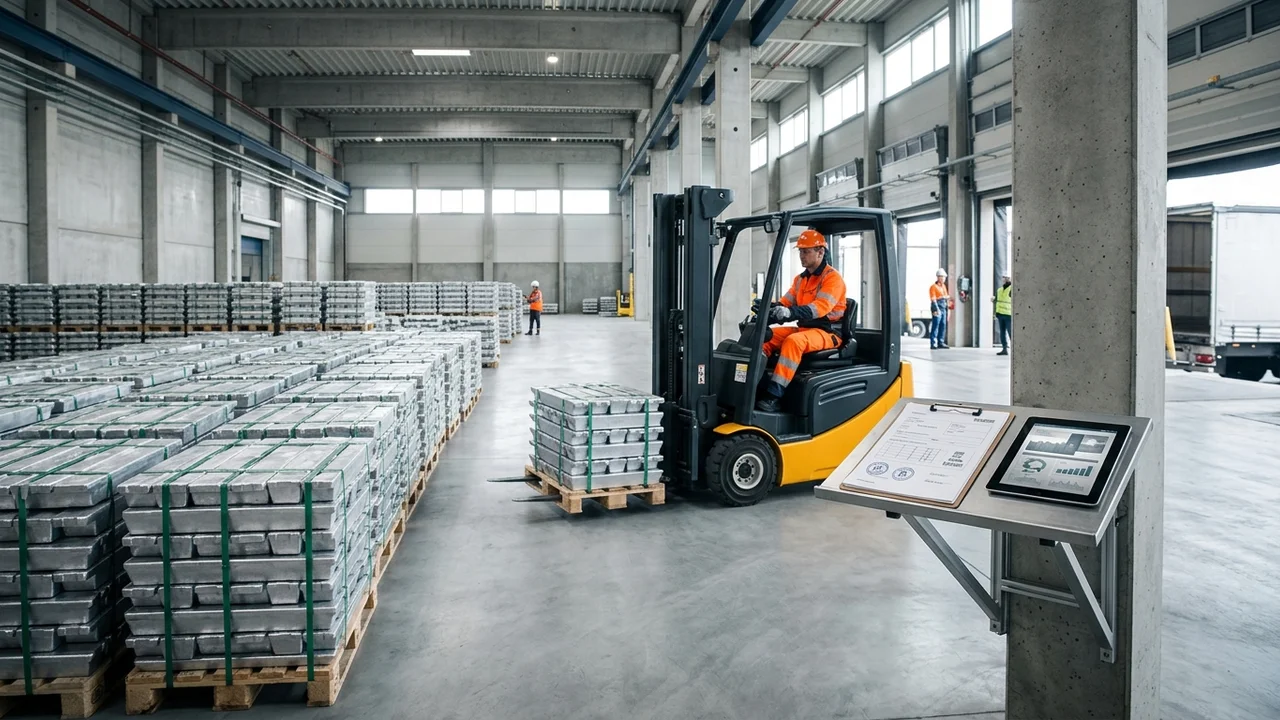
Caption: Aluminium's Annex II status limits CBAM embedded emissions to direct process CO₂ and PFCs, excluding the electricity used in smelting.
What Annex II Means for CBAM Aluminium Compliance
Annex II of Regulation (EU) 2023/956 lists the goods for which only direct embedded emissions are priced — not indirect emissions from electricity consumption. Aluminium is one of four Annex II sectors alongside iron and steel, electricity, and hydrogen.
The reason aluminium sits in Annex II is structural: EU aluminium producers receive state aid compensation for indirect carbon costs under Article 10a(6) of the EU ETS Directive. Including indirect emissions in CBAM while compensating domestic producers for those same costs would create an asymmetry that distorts the carbon leakage correction CBAM is designed to provide. Recital 67 of the original regulation signals Commission intent to extend indirect coverage in a future review, but no proposal existed as of April 2026.
The practical result for importers is significant. A Chinese smelter powered by a coal-heavy grid emits approximately 13 tCO₂/t in indirect electricity emissions. Under CBAM, those 13 tonnes are not priced. Only the direct emissions from carbon anode consumption and PFC events, totalling roughly 1.5–2.1 tCO₂/t, enter the certificate calculation. This is the indirect emissions loophole in CBAM aluminium, and it remains legally in force for the 2026 compliance period.
CN Codes for CBAM Aluminium Goods
The following table lists all CN codes covered under Annex I of Regulation (EU) 2023/956 for the aluminium sector. EU importers must classify every shipment against this list before applying compliance obligations.
| CN Code | Product Description | Annex II (Direct Only) |
|---|---|---|
| 7601 10 | Aluminium, not alloyed (unwrought primary) | Yes |
| 7601 20 | Aluminium alloys (unwrought) | Yes |
| 7603 | Aluminium powders and flakes | Yes |
| 7604 | Aluminium bars, rods, and profiles | Yes |
| 7605 | Aluminium wire | Yes |
| 7606 | Aluminium plates, sheets, and strip (>0.2 mm) | Yes |
| 7607 | Aluminium foil (thickness 0.2 mm or less) | Yes |
| 7608 | Aluminium tubes and pipes | Yes |
| 7609 | Aluminium tube and pipe fittings | Yes |
| 7610 | Aluminium structures and structural parts | Yes |
| 7616 | Other aluminium articles | Yes |
Excluded from CBAM scope: CN code 7602 (aluminium waste and scrap) and 7615 (table, kitchen, and household articles of aluminium) are not in Annex I and carry no CBAM obligation. Secondary aluminium produced from scrap inputs is zero-rated for embedded emissions purposes, meaning the scrap itself contributes zero to the embedded emissions calculation.
Greenhouse Gases Covered: CO₂ and PFCs
CBAM aluminium embedded emissions cover 3 greenhouse gases: carbon dioxide (CO₂) from anode consumption, tetrafluoromethane (CF₄), and hexafluoroethane (C₂F₆). The latter two are perfluorocarbons (PFCs) generated during anode effect events in the Hall-Héroult electrolysis process.
PFCs have exceptionally high global warming potential (GWP). CF₄ carries a GWP of 6,630, and C₂F₆ carries a GWP of 11,100. Even small quantities of PFC emissions translate into significant CO₂-equivalent volumes. Anode effects occur when alumina (Al₂O₃) concentration in the electrolytic bath drops below a threshold, causing the bath voltage to spike. Modern smelters operating in Norway, Iceland, and Canada have minimized anode effects to near-zero frequency. Legacy smelters in Russia, China, and GCC countries still produce PFC emissions at rates of 0.3–1.5 tCO₂e/t of primary aluminium.
When obtaining embedded emissions data from your non-EU supplier, the monitoring plan must capture both CO₂ from anode consumption and PFC emissions from anode events. A supplier report that accounts only for CO₂ and ignores PFCs will understate embedded emissions and create a compliance gap in your declaration.
Emission Factors: Primary vs. Secondary Aluminium
Two production types define the embedded emissions landscape for CBAM aluminium importers, and the difference between them is commercially decisive.
Primary aluminium is produced via the Hall-Héroult process, which electrolyzes molten aluminium oxide (alumina) using carbon anodes. Direct emissions from this process, including PFCs, run approximately 1.5–2.1 tCO₂e/t. At the current EU ETS price of ~€70/tCO₂, gross CBAM cost for primary aluminium sits at approximately €105–€147 per tonne. That gross cost is then multiplied by the 2026 CBAM factor of 2.5% (reflecting 97.5% remaining free allocation), producing a net 2026 certificate obligation of roughly €2.60–€3.70 per tonne. The net cost rises steeply through the free allocation phase-out schedule: by 2030, the CBAM factor reaches 48.5%, and by 2034, 100% of embedded emissions require certificate coverage.
Secondary aluminium (recycled from scrap) produces approximately 0.05–0.1 tCO₂/t in direct emissions. The scrap input itself carries zero embedded emissions under CBAM rules. For importers sourcing aluminium billets, sheets, or profiles made from recycled content, the CBAM certificate obligation is negligible compared to primary aluminium. Requesting documented scrap content ratios from suppliers is the fastest compliance optimization available for aluminium importers.
Caption: Primary aluminium carries 1.5–2.1 tCO₂e/t in direct emissions; secondary aluminium from scrap sits at near-zero, dramatically reducing CBAM certificate obligations.
How to Calculate CBAM Embedded Emissions for Aluminium
The embedded emissions calculation for CBAM aluminium follows the method in Implementing Regulation (EU) 2025/2547. The 5 steps below apply to direct emissions and PFCs for Annex II aluminium goods.
The steps for calculating aluminium embedded emissions are listed below.
- Obtain the specific direct embedded emissions from the non-EU production installation in tCO₂e per tonne of aluminium. This value must include both CO₂ from anode consumption and PFC emissions converted to CO₂-equivalent using GWP factors.
- Confirm the production route used at the installation. The Hall-Héroult electrolytic process applies to all primary aluminium. For secondary aluminium (scrap-based), document the scrap content ratio and confirm the zero-rating for scrap inputs.
- Apply default values if the producer cannot or will not provide specific measured data. Default values from Implementing Regulation (EU) 2025/2621 carry a 10% mark-up above the calculated default in 2026, rising to 20% in 2027 and 30% from 2028 onward.
- Arrange third-party verification for all actual (non-default) emission values. Accredited verifiers cannot register in the CBAM Registry until September 1, 2026. A physical site visit to the non-EU production installation is mandatory for the first verification period covering 2026 imports. Verifier fees range from €5,000 to €50,000 per installation.
- Multiply verified emissions by imported tonnage to calculate total embedded emissions for the declaration period. Apply the CBAM factor for the relevant year to determine certificate surrender obligation.
For a practical starting point, use the CBAM aluminium guide for sector-specific default values by country of origin, or the CBAM cost calculator to model certificate cost scenarios at different ETS price levels.
The Indirect Emissions Loophole: What Aluminium Importers Need to Know
The indirect emissions exclusion for CBAM aluminium creates a structural gap between regulatory cost and actual carbon intensity. Electricity accounts for approximately 14–16 MWh per tonne of primary aluminium produced. The carbon intensity of that electricity varies by grid source from roughly 0.01 tCO₂/MWh in Iceland (hydropower) to 0.70 tCO₂/MWh in China and India (coal-heavy grids).
At a coal-heavy grid carbon intensity of 0.70 tCO₂/MWh and 15 MWh/t consumption, indirect emissions total approximately 10.5 tCO₂/t. Under CBAM, those 10.5 tonnes go unpriced. The competitive gap between a Chinese or Indian coal-grid smelter and a Norwegian hydropower smelter is therefore not corrected by CBAM in its current form, contrary to what the mechanism's carbon leakage rationale would suggest.
The Commission acknowledged this gap in Recital 67 and noted the review obligation under Article 30 of Regulation (EU) 2023/956. Importers relying on non-EU primary aluminium from coal-grid countries should treat the current indirect exclusion as a temporary feature of Phase 1 compliance, not a permanent structural benefit. Any extension of CBAM indirect emissions coverage to aluminium would represent the single largest change to aluminium importer cost exposure.
CBAM Aluminium Compliance: Key Deadlines for EU Importers
EU importers of aluminium goods who have not yet secured authorization as an authorized CBAM declarant face an immediate action requirement. CBAM compliance for importers follows the deadlines below.
- March 31, 2026: Application deadline for authorized CBAM declarant status under Article 17(7a) of Regulation (EU) 2023/956 as amended by Regulation (EU) 2025/2083. Importers who applied by this date may continue importing provisionally while the 120-day authorization decision clock runs.
- September 1, 2026: Accredited verifiers can register in the CBAM Registry. Importers should identify and engage verifiers before this date to secure capacity, given the limited number of EN ISO/IEC 14065-accredited verifiers worldwide.
- February 1, 2027: Certificate sales begin via the national competent authority. No secondary market exists — certificates are purchased from and sold back to the competent authority only.
- September 30, 2027: First CBAM declaration deadline, covering all calendar year 2026 CBAM imports. The declaration must report total imported quantities, verified embedded emissions per CN code and country of origin, and the number of certificates surrendered.
For the full authorization and compliance workflow, the CBAM compliance for importers section covers the complete 11-step process with article citations.
Frequently Asked Questions: CBAM Aluminium Importers
Does CBAM apply to recycled aluminium imports?
CBAM applies to recycled aluminium imports if the CN code appears in Annex I of Regulation (EU) 2023/956, but the embedded emissions obligation is near-zero. Scrap inputs used in aluminium production are zero-rated under CBAM, meaning secondary aluminium produced from recycled content carries direct embedded emissions of only 0.05–0.1 tCO₂/t. The de minimis exemption of 50 tonnes annual mass may also apply to smaller importers.
Are indirect electricity emissions included in CBAM for aluminium?
Indirect electricity emissions are not included in CBAM for aluminium. Aluminium is listed in Annex II of Regulation (EU) 2023/956, which restricts the certificate obligation to direct emissions and PFCs only. This means the 14–16 MWh of electricity consumed per tonne of primary aluminium, and its associated carbon intensity, does not enter the CBAM calculation. Cement and fertilizers, by contrast, include indirect emissions because their domestic EU counterparts do not receive ETS indirect cost compensation.
What is the CBAM cost for primary aluminium in 2026?
The gross CBAM cost for primary aluminium in 2026 is approximately €105 per tonne at an EU ETS price of €70/tCO₂, based on a direct emission factor of ~1.5 tCO₂/t. The net certificate obligation in 2026 is much lower because 97.5% of free allocation remains in force, yielding an effective CBAM factor of 2.5%. Net 2026 cost is therefore approximately €2.60 per tonne. This net cost increases sharply through the free allocation phase-out schedule.
Which countries export the most aluminium subject to CBAM?
Four countries export the largest volumes of CBAM-subject aluminium to the EU: China (approximately €3.9 billion in 2024), Turkey (approximately €2.8 billion), the UAE via Emirates Global Aluminium, and Bahrain via ALBA. Norway and Iceland, two of Europe's largest aluminium producers, are exempt from CBAM as EEA members. Switzerland is also exempt due to its ETS linkage agreement with the EU.
Do PFC emissions from aluminium smelting affect CBAM certificate calculations?
PFC emissions from aluminium smelting are included in CBAM certificate calculations. Tetrafluoromethane (CF₄) and hexafluoroethane (C₂F₆) generated during anode effect events must be reported in CO₂-equivalent terms using GWP values of 6,630 and 11,100 respectively. Modern smelters have near-zero PFC events; legacy facilities in Russia and China may add 0.3–1.5 tCO₂e/t of PFC-equivalent emissions to the declaration total.
Can aluminium importers deduct carbon prices paid in the country of origin?
Aluminium importers can deduct carbon prices effectively paid in the country of origin under Article 9 of Regulation (EU) 2023/956, provided the carbon pricing scheme is legally binding, effectively enforced, and recognized by the Commission. As of April 2026, no major aluminium-exporting country outside the EEA and Switzerland operates a qualifying carbon pricing scheme for aluminium production. South Korea's K-ETS and the UK ETS are under Commission assessment. Russia, China, Turkey, the UAE, and Bahrain have no qualifying schemes.
How CBAM Aluminium Obligations Interact with EU ETS Free Allocation
For EU aluminium producers receiving ETS free allocation, the CBAM factor calculation in 2026 applies a 2.5% reduction to the baseline free allocation, meaning 97.5% of allowances remain in place. This SEFA (Sectoral Emissions Factor Adjustment) is reflected in the CBAM declaration calculation for authorized declarants. The mechanism prevents double pricing between CBAM obligations and the ETS compensation received by EU domestic producers.
The free allocation phase-out accelerates significantly from 2029 onward. In 2029, 22.5% of free allocation is removed; in 2030, that figure jumps to 48.5%. For aluminium importers planning multi-year supply agreements and procurement contracts, the 2029–2030 period is the critical window for financial modeling. The how embedded emissions are calculated resource provides the full SEFA calculation methodology and phase-out schedule.
For non-EU aluminium exporters managing their CBAM cost exposure from the supply side, the complementary perspective appears in the CBAM exporters aluminium guide, which covers installation-level monitoring, default value strategy, and Article 9 deduction eligibility by country.
Purchasing CBAM certificates for aluminium begins February 1, 2027. Certificates are priced at the quarterly average EU ETS auction clearing price for 2026 imports. Aluminium importers holding quarterly positions above 50% of cumulative embedded emissions from the start of 2027 meet the quarterly holding requirement under Article 22(2) of Regulation (EU) 2023/956 as amended by Regulation (EU) 2025/2083.