CBAM default values carry a built-in financial penalty: a mark-up of 10% above the country-sector average in 2026, rising to 20% in 2027 and 30% from 2028 onward, established by Implementing Regulation (EU) 2025/2621. Importers who cannot supply verified actual emission data from their supplier's production installation use these defaults by necessity, and the cost difference between the default and actual embedded emissions determines exactly how much that penalty costs. The gap between default and actual values is not uniform; for Turkish Portland cement it reaches approximately 80%, while for Chinese blast furnace steel the default of 3.167 tCO₂e per tonne of slab exceeds the sector benchmark of 1.370 tCO₂e per tonne by more than 130%. Understanding which default applies to which product and country, and how to replace it with verified data, is the central compliance decision for EU importers in 2026.
What Are CBAM Default Values?
CBAM default values are emission intensity figures published by the European Commission for each product-country combination, used when an importer cannot obtain specific embedded emissions data from the production installation, with a punitive mark-up applied to incentivize measurement and verification. The legal basis is Article 7(7) of Regulation (EU) 2023/956, and the specific figures and mark-up schedule for the definitive phase appear in IR (EU) 2025/2621, published December 31, 2025.
Default values represent the average emission intensity for a given country of origin and product type, derived from the best available production data for that country-sector combination. The Commission calculates them using the same calculation methodology as actual embedded emissions (IR 2025/2547), but applies them at the country level rather than the installation level. This means a Turkish steel importer who uses defaults is assigned Turkey's average emission intensity, not the specific figure for the mill they actually buy from.
The core relationship between defaults and EU CBAM costs is direct: higher default values produce a larger certificate obligation, and a larger certificate obligation at the current EU ETS price of approximately €70/tCO₂ (as of late March 2026) produces a larger financial burden per tonne imported. Importers who source from production installations that operate below the country average carry the cost of the country-wide average, regardless of their supplier's actual performance.
For a complete grounding in how the broader mechanism works, the EU CBAM guide covers the certificate obligation, registry, and declaration requirements that frame where default values fit.
The Default Value Mark-Up Schedule: 10%, 20%, 30%
The mark-up schedule escalates deliberately across three years to increase the financial incentive for importers and their suppliers to invest in measurement and third-party verification.
The three mark-up tiers established in IR (EU) 2025/2621 are set out in the table below.
| Year | Steel, Cement, Aluminium, Hydrogen | Fertilizers | Source |
|---|---|---|---|
| 2026 | +10% above country-specific average | +1% | IR (EU) 2025/2621 |
| 2027 | +20% above country-specific average | +1% | IR (EU) 2025/2621 |
| 2028 onward | +30% above country-specific average | +1% | IR (EU) 2025/2621 |
Fertilizers receive a 1% mark-up rather than the 10-30% schedule applied to the other four sectors. The Commission cited agricultural price sensitivity and food security concerns in the Omnibus explanatory memorandum when justifying this differentiated treatment.
The escalation pattern signals regulatory intent clearly: the 10% mark-up in 2026 is a warning; the 30% from 2028 is a structural cost. Importers of BF-BOF steel using the China default of 3.167 tCO₂e/t at a 30% mark-up and an ETS price of €70/tCO₂ face a gross CBAM cost of approximately €288/t before the free allocation adjustment. At full phase-in in 2034, with the CBAM factor at 100% and consensus ETS forecast prices of approximately €126/tCO₂, that same default position produces CBAM costs that can approach or exceed the FOB export price of the steel itself.
One nuance affects 2026 specifically. Due to the interaction between the SEFA methodology (IR 2025/2620, which adjusts for EU ETS free allocation) and how benchmark defaults are constructed for the first year, importers in specific product-country combinations find that their CBAM liability under default values runs slightly lower than it would under actual verified values. The Commission has not issued formal clarification on this as of April 2026, and it reverses from 2027 as mark-ups increase and free allocation continues to phase out.
Country-Specific Default Values by Sector
Default values in IR (EU) 2025/2621 are set per country of origin and per product, reflecting production technology profiles, fuel mix, and grid carbon intensity for each country. Countries with older, higher-carbon production infrastructure receive higher defaults. Countries with no carbon pricing receive no deduction under Article 9 of Regulation (EU) 2023/956.
The six CBAM sectors, their embedded emissions scope, and their default value structure are summarized below.
| Sector | Emissions Priced | GHGs | 2026 Default Mark-up | Key Country Default Example |
|---|---|---|---|---|
| Iron and steel | Direct only | CO₂ | +10% | China: 3.167 tCO₂e/t slab (BF-BOF) |
| Cement | Direct + indirect | CO₂ | +10% | Turkey Portland: ~1.584 tCO₂e/t |
| Aluminium | Direct only | CO₂ + PFCs | +10% | UAE/Bahrain: based on gas-fired grid |
| Fertilizers | Direct + indirect | CO₂ + N₂O | +1% | Egypt urea: based on SMR gas intensity |
| Electricity | Direct only | CO₂ | N/A (default is standard) | Country grid average tCO₂/MWh |
| Hydrogen | Direct only | CO₂ | +10% | Global transitional default: 10.4 tCO₂/t |
Steel: The Largest Spread Between Default and Benchmark
Steel defaults in IR (EU) 2025/2621 vary significantly across production routes and origin countries. The three production routes and their CBAM benchmark values are BF-BOF (blast furnace, basic oxygen furnace) at 1.370 tCO₂e/t of crude steel, DRI-EAF (direct reduced iron, electric arc furnace) at 0.481 tCO₂e/t, and Scrap-EAF at 0.072 tCO₂e/t. Route classification follows a majority rule: when more than 50% of crude steel mass originates from scrap, the product is classified as Scrap-EAF; when more than 50% originates from DRI, it is classified as DRI-EAF; otherwise it is classified as BF-BOF.
China's country-specific default of 3.167 tCO₂e/t for steel slab stands as the most financially significant default in the CBAM system. Chinese steel exporters to the EU, including intermediate manufacturers using Chinese slab as a precursor, face a default that is 131% above the BF-BOF benchmark. The financial incentive to replace this default with verified actual data is proportionately large: a Chinese steel mill producing at 2.0 tCO₂/t actual emissions would, from 2027 onward, pay CBAM on 2.0 tCO₂/t rather than 3.167 tCO₂/t plus the 20% mark-up.
The major steel exporters to the EU and their relevant CBAM default context are as follows.
- India (approximately 4.33 Mt annually to EU): BF-BOF dominant; Carbon Credit Trading Scheme (CCTS) pilot exists but does not yet qualify for Article 9 deduction; high default exposure
- South Korea (approximately 3.38 Mt annually): K-ETS applies; potential Article 9 deduction being assessed; lower effective cost if deduction recognized
- China (approximately 3.5 billion EUR in basic steel plus 12.5 billion EUR in steel articles): highest country default of 3.167 tCO₂e/t; EU ETS covers power sector only, not steel, in 2026
- Turkey (approximately 2.59 Mt annually): BF-BOF and EAF mix; no qualifying carbon price; full default exposure
- UK (approximately 3.08 Mt annually): UK ETS applies but UK is not exempt from EU CBAM; Article 9 deduction for UK ETS costs is unresolved
Cement: Default vs. Actual Gap Reaches 80% for Turkey
Cement has the largest documented gap between country default and actual emission intensity among CBAM sectors. The default for Turkish Portland cement in IR (EU) 2025/2621 is approximately 1.584 tCO₂e/t (including indirect emissions and mark-up), while Turkey's actual average intensity from Turkish kilns is approximately 0.88 tCO₂/t for Portland cement. The 80% differential means an importer of Turkish cement using defaults pays CBAM on nearly twice the emissions their supplier actually produces.
At the current EU ETS price of approximately €70/tCO₂ and the 2026 10% mark-up position, Turkish cement under defaults carries a gross CBAM cost of approximately €83/t. Turkish cement FOB export prices frequently fall below €60-70/t depending on grade and distance. The CBAM default cost on Turkish cement in 2028 (at the full 30% mark-up) at €70/tCO₂ exceeds the product value across the majority of Mediterranean and Adriatic trade lanes where Turkish clinker is most actively traded.
Turkey supplies approximately 35-39% of EU cement imports, representing 3.3-4.8 Mt annually. The financial pressure defaults create on Turkish cement exporters and their EU importers is the single largest default-value commercial risk in the CBAM system.
Aluminium: Indirect Emissions Not Priced, But Defaults Reflect Reality
Aluminium carries a structural feature that distinguishes it from cement and fertilizers: only direct emissions are priced under CBAM (aluminium is listed in Annex II of Regulation 2023/956). Indirect emissions from electricity consumption are excluded. This matters for defaults because primary aluminium smelting consumes 14-16 MWh per tonne, and the carbon intensity of that electricity varies from approximately 0.01 tCO₂/MWh in Iceland and Norway (hydropower) to approximately 0.7 tCO₂/MWh in China and India (coal-heavy grids).
Country-specific aluminium defaults capture direct emissions including perfluorocarbons (PFCs), specifically CF₄ with a GWP of 6,630 and C₂F₆ with a GWP of 11,100, from anode effect events during Hall-Héroult electrolysis. Legacy smelters in China, Russia, and GCC countries produce higher PFC emissions than modern smelters, which is reflected in their country defaults.
Norway (approximately EUR 4.4 billion in aluminium exports to EU), Iceland (approximately EUR 2.1 billion), and Switzerland (approximately EUR 1.7 billion) are exempt from CBAM under Annex III. China (approximately EUR 3.9 billion) and Turkey (approximately EUR 2.8 billion) face full CBAM exposure on direct emissions.
How to Replace CBAM Default Values with Actual Data
Actual embedded emissions replace default values when an importer obtains a verified emission declaration from the production installation. The replacement process requires three elements: a monitoring plan at the installation level, a calculated emission figure using the methodology in IR (EU) 2025/2547, and third-party verification under DR (EU) 2025/2551.
The four steps to move from defaults to actual values are listed below.
- Engage the production installation: Request that the exporter's facility prepare a monitoring plan documenting how embedded emissions are measured, calculated, and recorded per IR (EU) 2025/2547. This is the facility's obligation, but the EU importer must initiate the request and confirm the facility is willing to comply.
- Commission third-party verification: Engage an accredited verifier (accredited under EN ISO/IEC 14065 by a national accreditation body recognized by European Accreditation). The verifier must conduct a physical site visit for the first verification period. Verifier registration opens September 1, 2026 under Regulation (EU) 2025/2083.
- Receive the verification report: The verifier issues a report confirming the specific embedded emissions figure in tCO₂e per tonne of product, including PFCs for aluminium and N₂O for fertilizers where applicable.
- Submit actual values in the CBAM declaration: The annual declaration submitted to the CBAM Registry (deadline September 30, 2027 for the 2026 import year) uses the verified figure rather than the country default. The reduction in certificate obligation is the financial saving relative to the default scenario.
The CBAM embedded emissions page covers the calculation methodology for specific embedded emissions in full, including the distinction between direct and indirect emissions by sector.
For the 2026 import year, the practical timeline places pressure on importer-supplier coordination. The authorization application deadline for EU importers was March 31, 2026 (Article 17(7a), inserted by Regulation (EU) 2025/2083). Importers who did not obtain authorization by this date operate under provisional status. The CBAM declaration covering 2026 imports is due September 30, 2027, meaning the window for collecting and verifying actual emission data from 2026 production runs through the first half of 2027.
When Are Default Values Compulsory?
Default values become the only option in two situations: when the production installation does not provide emission data at all, and when the data provided fails third-party verification.
For electricity imports specifically, the situation is inverted. Default values are the standard approach for electricity, not the fallback. Actual values for electricity may only be used when all five criteria in Annex III, point 5 of Regulation 2023/956 are simultaneously satisfied, including a direct power purchase agreement with a specific generator, hourly temporal matching between generation and import, and an emission intensity below 550 g CO₂/kWh. In practice, very few electricity imports qualify for actual values.
Importers facing suppliers unwilling to provide monitoring data have limited options: they can accept the default and its associated cost, they can switch to suppliers who do provide verified data, or they can factor the default cost into their commercial terms when negotiating prices with exporters. The penalty for not surrendering sufficient certificates is €100 per tonne CO₂e not covered (Article 26(1), as amended by Regulation (EU) 2025/2083), which is separate from, and additional to, the underlying certificate cost.
Does Carbon Pricing in the Country of Origin Reduce the Default?
Carbon pricing in the country of origin does not reduce the default value itself, but it does reduce the net CBAM certificate obligation through the Article 9 deduction mechanism. The default value is set without regard to whether the origin country operates a carbon pricing scheme. The Article 9 deduction is applied after the emission quantity is established (whether by default or actual values) and allows importers to deduct the carbon price effectively paid in the third country from the CBAM certificate price.
The deduction requires that the carbon price was legally paid, covered the embedded emissions in question, and that no export rebate was received. Countries operating recognized carbon pricing schemes, including South Korea (K-ETS), are being assessed for Article 9 qualification. Countries with no carbon pricing, including Turkey, China, India, Egypt, and Algeria, provide no deduction.
The CBAM regulation page covers the full legal architecture of Regulation (EU) 2023/956 and the implementing regulations through which the default value system, including IR (EU) 2025/2621, operates.
The Financial Cost of Using Default Values
The financial cost of using default values instead of verified actual data depends on three variables: the gap between the country default and the installation's actual emission intensity, the applicable CBAM mark-up tier, and the EU ETS certificate price.
The table below illustrates the financial impact for a selection of high-volume product-country combinations, using the current EU ETS price of approximately €70/tCO₂ and the 2026 mark-up of 10%.
| Product | Country | Default (tCO₂e/t) | Typical Actual (tCO₂e/t) | CBAM Cost Difference @ €70 | Source |
|---|---|---|---|---|---|
| Steel slab (BF-BOF) | China | 3.167 | ~2.0 | ~€82/t excess | IR 2025/2621 |
| Portland cement | Turkey | ~1.584 | ~0.88 | ~€49/t excess | IR 2025/2621 |
| Steel slab (BF-BOF) | India | Country average + 10% | ~2.0 | Varies by mill | IR 2025/2621 |
| Primary aluminium | UAE | Country average + 10% | ~1.5–2.1 | Varies by smelter | IR 2025/2621 |
| Urea fertilizer | Egypt | Country average + 1% | ~2.3–2.6 | Small (1% mark-up only) | IR 2025/2621 |
These differences represent gross CBAM costs before the free allocation adjustment. The net certificate obligation in 2026 is multiplied by the CBAM factor of 2.5% (because 97.5% of EU ETS free allocation remains for CBAM sectors in 2026). The net cost grows as free allocation phases out: the CBAM factor reaches 48.5% in 2030 and 100% in 2034. An importer absorbing an €82/t gross default penalty on Chinese steel pays approximately €2.05/t net in 2026, but approximately €39.77/t net in 2030, and the full €82/t net in 2034 (assuming constant ETS price and same trade volume).
The CBAM calculation page details how to apply the SEFA free allocation adjustment methodology against both default and actual embedded emission values to arrive at the net certificate obligation.
Are Exempt Countries Assigned Default Values?
No. Countries exempt from CBAM are not assigned default values because their goods fall outside the scope of Regulation (EU) 2023/956 entirely. The exempt countries listed in Annex III are Iceland, Liechtenstein, Norway (all EEA), and Switzerland (linked ETS). Goods originating from these territories do not require CBAM certificates, and no default emission factor is applied to them.
Countries not on the Annex III exemption list, including the United Kingdom, are subject to CBAM despite operating an equivalent carbon pricing scheme (the UK ETS). UK exporters face the same default values as other third countries. The potential Article 9 deduction for UK ETS carbon prices paid by UK producers is under assessment and has not been confirmed as of April 2026.
For the exporter perspective on default values, including how non-EU producers can provide the monitoring data that EU importers need to escape defaults, the CBAM default values for exporters page covers the operational workflow from the production installation's side.
Contextual Border: How Default Values Fit Within the Broader CBAM Compliance System
Default values are one component of a larger compliance architecture. Importers encounter them at the calculation stage of the CBAM workflow, after authorization and before declaration. Understanding where defaults fit relative to the other compliance obligations clarifies both their importance and their limits.
What Determines Whether an Importer Uses Defaults or Actual Values
Three factors determine whether an importer uses default values or actual verified data: the supplier's willingness to prepare a monitoring plan, the existence of an accredited verifier willing to verify the production installation, and whether the production installation meets the methodological requirements in IR (EU) 2025/2547. Suppliers located in countries with no prior CBAM monitoring infrastructure, particularly in developing economies, face the highest barrier to providing actual values in 2026. The September 1, 2026 verifier registration opening under Regulation (EU) 2025/2083 creates a bottleneck: until verifiers are registered and accredited, physical site visits for 2026 production periods cannot begin.
Is Using Default Values a CBAM Violation?
No. Using default values is a legal compliance pathway, not a violation. Regulation (EU) 2023/956 Article 7(7) explicitly permits the use of defaults when actual values cannot be obtained. The penalty of €100 per tonne CO₂e applies to failure to surrender sufficient certificates, not to the use of default values. An importer who uses defaults, calculates the certificate obligation correctly using those defaults, and surrenders the required certificates is in full compliance. The financial cost is higher than it would be under actual values in most product-country combinations, but the legal obligation is met.
Will Default Values Change After 2026?
Yes. IR (EU) 2025/2621 establishes defaults for the definitive phase beginning January 1, 2026, but the Commission reviews and updates default values periodically as production data improves. Countries and sectors where large volumes of verified actual data flow into the CBAM Registry will influence future default recalculations. Sectors with high verification rates provide more accurate country averages, which can shift defaults in either direction. Importers who have invested in actual value verification are insulated from default revisions; importers relying on defaults face the risk that future default updates move against them.
Does the De Minimis Threshold Affect Default Value Obligations?
The de minimis threshold of 50 tonnes annual mass per importer (Article 2(3a), inserted by Regulation (EU) 2025/2083) excludes small-volume importers from all CBAM obligations, including the need to calculate against default or actual values. Electricity and hydrogen have no de minimis threshold. Importers above the 50-tonne threshold must engage with default or actual values for every CBAM-covered import consignment.
Frequently Asked Questions
What is the CBAM default value mark-up for steel in 2028?
The CBAM default value mark-up for steel (and cement, aluminium, and hydrogen) from 2028 onward is 30% above the country-specific average emission intensity, established by Implementing Regulation (EU) 2025/2621. This is the final tier of a three-step escalation: 10% in 2026, 20% in 2027, and 30% from 2028 onward. Fertilizers retain a 1% mark-up throughout, reflecting food security policy considerations in the Omnibus regulation.
Can an importer switch from default values to actual values after using defaults for one year?
Yes. An importer can switch from default values to verified actual values for any future CBAM declaration period once the production installation has a verified monitoring plan and a verification report from an accredited verifier. The switch does not require any amendment to previous declarations that used defaults; it applies from the declaration period in which verified data first becomes available. Importers must use actual values consistently once they are obtained: they cannot alternate between default and actual values for the same production installation without a documented reason for the data gap.
Are CBAM default values the same as the transitional period defaults?
No. The transitional period defaults (published in IR (EU) 2023/1773, applicable October 2023 through December 2025) used different methodology and different numerical values than the definitive phase defaults in IR (EU) 2025/2621. The definitive phase defaults are generally higher and reflect more precise country-level production data. The transitional default for Chinese steel slab was approximately 1.89 tCO₂e/t; the definitive phase default in IR (EU) 2025/2621 is 3.167 tCO₂e/t. Importers who relied on transitional defaults as a proxy for their ongoing cost exposure face a significant upward adjustment in 2026.
Do default values apply to precursor goods embedded in complex products?
Yes. When a complex product (such as steel pipes, aluminium structures, or fertilizer mixtures) is imported, the embedded emissions of the precursor goods it contains are included in the total embedded emissions calculation. If actual emission data is not available for the precursor, the relevant country-specific default value for that precursor applies. This means the default value problem compounds through the supply chain: an importer of steel pipes whose supplier used Chinese slab without verified emission data carries the Chinese slab default value as part of the total embedded emissions of the pipe.
For sector-specific guidance on how default values apply within each product category, the CBAM sectors page covers CN codes, production routes, and emission factor ranges across all six CBAM sectors.
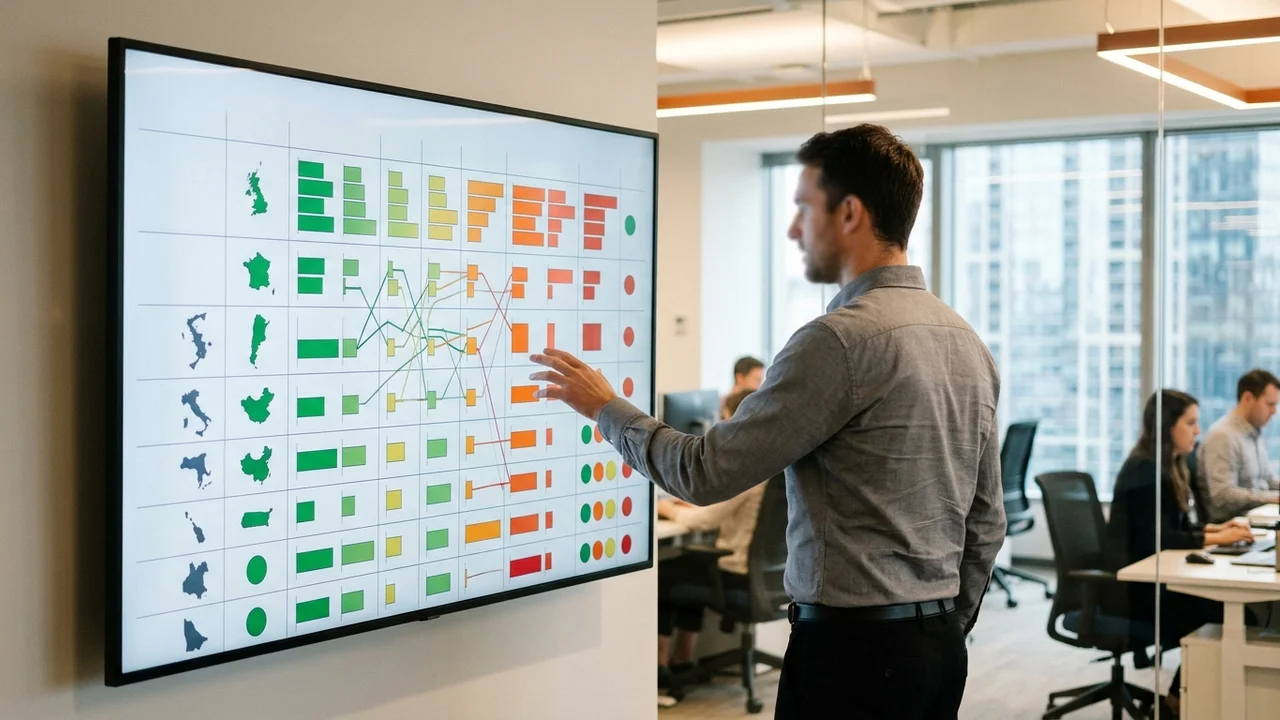
Caption: IR (EU) 2025/2621 mark-up tiers escalate each year to increase the financial incentive for verified actual emission reporting across CBAM sectors.
Caption: Country default values for CBAM embedded emissions vary substantially; the China BF-BOF steel default exceeds the sector benchmark by more than 130%.