Developing countries face CBAM costs that range from negligible to existential depending on their export mix, with the IMF projecting a 1.6% GDP decline for Mozambique from the mechanism's impacts alone. The debate centers on a fundamental question: does the EU's Carbon Border Adjustment Mechanism, established by Regulation (EU) 2023/956, represent sound climate policy or a new form of trade barrier dressed in environmental language? The answer differs sharply depending on whether the country in question is a major emerging economy or a least-developed nation with limited diplomatic leverage. This article maps who bears the highest financial exposure, how the controversy has escalated into formal WTO challenges, and what options remain for affected governments and exporters.
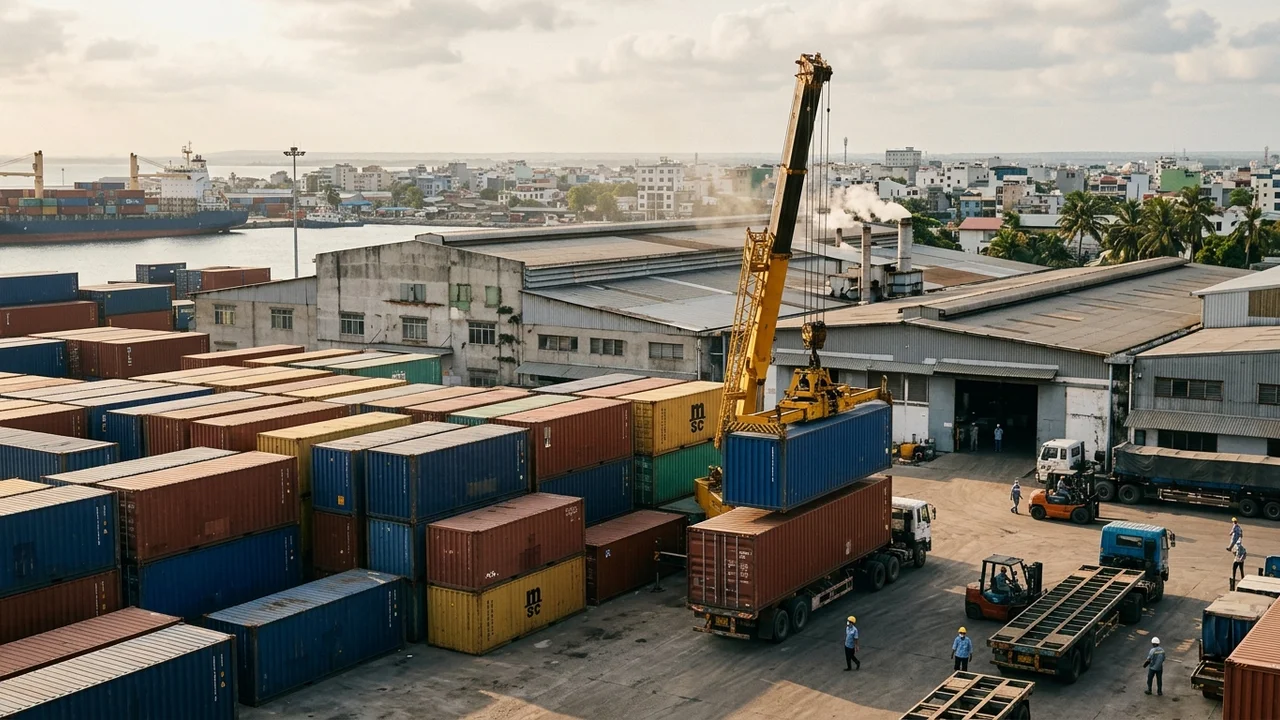
Caption: CBAM exposure concentrates in countries exporting steel, cement, aluminium, and fertilizers to EU markets.
What Is CBAM's Financial Impact on Developing Nations?
CBAM's financial impact on developing nations is a certificate-based obligation that falls legally on EU importers but transfers economically to non-EU exporters through price renegotiation, contract restructuring, or lost competitiveness. The mechanism requires EU importers of steel, cement, aluminium, fertilizers, electricity, and hydrogen to purchase CBAM certificates proportional to the embedded CO₂ emissions of their imports, priced at the EU ETS carbon price (approximately €70 per tonne CO₂ as of late March 2026).
The key distinction is between legal and commercial burden. Non-EU exporters, including those in developing countries, carry no direct legal obligation under Regulation (EU) 2023/956. The EU importer holds the legal compliance duty. But commercial reality operates differently: EU buyers facing higher landed costs either absorb the difference, pass it to consumers, or press their suppliers for lower export prices. Exporters in developing countries with limited market power face the third option by default.
The net financial impact in 2026 remains small because the CBAM factor, representing the fraction of EU ETS free allocation phased out, stands at only 2.5%. For blast furnace steel at an emission factor of approximately 2.0 tonnes CO₂ per tonne of product and an ETS price of €70 per tonne, the net 2026 surcharge reaches approximately €3.50 per tonne. The mechanism undergoes the sharpest escalation between 2029 and 2030, when the CBAM factor jumps from 22.5% to 48.5%, and reaches full cost pass-through at 100% by 2034. A net cost of €3.50 per tonne in 2026 becomes approximately €140 per tonne by 2034 for the same product at equivalent ETS prices. Governments and exporters that treat 2026 costs as representative of the long-term burden are making a serious planning error.
The EU CBAM mechanism prices emissions at EU ETS levels, which currently sit at around €70 per tonne CO₂, while carbon prices in most developing nations range from zero to approximately $11 per tonne CO₂ in China's recently expanded national ETS. This gap is where the competitive asymmetry lives.
Which Developing Countries Face the Highest CBAM Exposure?
Four categories of exposure exist among developing nations: major emerging economies with high trade volumes, geographically captive mid-sized exporters, least-developed countries with narrow export bases, and nations with strategic green transition opportunities.
Major Emerging Economies: India and China
India holds approximately 6.6% of CBAM-covered imports to the EU, with steel representing over 60% of that exposure. India's steel exports to the EU fell 24.4% in FY2024–25, partly from CBAM anticipation effects. India's Carbon Credit Trading Scheme (CCTS) covers aluminium and cement in Phase 1 but excludes the steel sector entirely. The scheme is intensity-based rather than absolute-cap, meaning it does not currently qualify for the Article 9 deduction that would reduce an EU importer's certificate obligation.
China accounts for roughly 15% of total CBAM-covered imports to the EU, concentrated in steel and aluminium. China expanded its national ETS in March 2025 to cover steel, cement, and aluminium, adding approximately 3 billion tonnes CO₂ and 1,500 entities. However, the current price of approximately $11 per tonne CO₂ in the Chinese ETS covers only around 15% of the CBAM obligation at the current EU carbon price. China's steel slab default value under CBAM is set at 3.167 tCO₂e per tonne, significantly above typical actual Chinese steelmaker emissions. This gap creates a large incentive for Chinese producers to provide verified actual emissions data rather than accept the punitive default.
For detailed country-specific analysis of these two major economies, see the dedicated pages covering CBAM India exposure and the CBAM China position in EU trade negotiations.
Turkey: The Most Commercially Vulnerable Country
Turkey faces approximately €19 billion in CBAM-affected exports, representing nearly 8% of Turkey's total export value. No other non-EU country carries equivalent combined absolute and relative exposure. Turkey is the EU's largest supplier of cement at 35–39% EU market share, alongside significant steel and aluminium exports. Geographic proximity and deep supply chain integration with EU manufacturers limit Turkey's ability to divert trade to alternative markets, a constraint that amplifies CBAM's leverage.
Turkey enacted its Climate Law No. 7552 on July 9, 2025, establishing the legal basis for a domestic ETS. The pilot phase in 2026 operates with full free allocation, meaning no carbon price is "effectively paid" in the sense required for an Article 9 deduction. The cement data gap is particularly stark: Turkish cement actual emissions average approximately 0.88 tCO₂ per tonne, while the CBAM default for "other countries" Portland cement stands at 1.584 tCO₂e per tonne. At €70 per tonne CO₂, this gap of approximately 0.7 tCO₂ per tonne translates to roughly €49 per tonne in unnecessary additional costs for producers using the default rather than verified actual emissions.
Least-Developed Countries: The Hidden Vulnerability
Mozambique represents the most concentrated developing-country vulnerability to CBAM. Between 14% and 47% of Mozambique's total global exports fall under CBAM coverage, primarily aluminium from the Mozal smelter, which is operated by South32. IMF analysis projects a potential 1.6% drop in Mozambique's national GDP from CBAM impacts, the highest relative GDP exposure of any country globally. This figure receives minimal attention in European policy discussions despite its severity.
Egypt exports 46% of its highly carbon-intensive fertilizers to the EU, with producers including OCI and ElSewedy. Egypt also exports significant cement volumes to EU markets. Egypt has no carbon pricing scheme and no qualifying mechanism for the Article 9 deduction, meaning the full CBAM cost applies to its EU-bound exports. The financial pressure on Egyptian fertilizer producers is compounded by the separate EU additional tariffs on Russian and Belarusian fertilizers that took effect in July 2025, which have reshaped global fertilizer trade flows and intensified EU market competition.
The table below summarizes the exposure profile for key developing and emerging nations.
| Country | Main CBAM Sectors | Current Carbon Price | Article 9 Deduction Eligible | Relative Exposure |
|---|---|---|---|---|
| China | Steel, aluminium | ~$11/tCO₂ (national ETS) | Not currently | High (15% of covered EU imports) |
| India | Steel, aluminium, fertilizers | ~$10/t target (CCTS) | Not currently | High (6.6% of covered EU imports) |
| Turkey | Cement, steel, aluminium | Near-zero (pilot ETS) | Not currently | Highest relative (8% of total exports) |
| Mozambique | Aluminium | None | No | Highest GDP impact (1.6% IMF projection) |
| Egypt | Fertilizers, cement | None | No | High for fertilizers (46% to EU) |
| South Africa | Steel, aluminium | ~$9/tCO₂ (Carbon Tax) | Potentially (pending review) | Moderate |
| South Korea | Steel | ~$6–7/tCO₂ (K-ETS) | Likely yes (pending review) | Moderate |
| Morocco | Cement, fertilizers | None | No | Moderate (green transition opportunity) |
Why Is CBAM Controversial Among Developing Nations?
The controversy surrounding CBAM and developing countries concentrates on three intersecting objections: the CBDR principle, the revenue allocation decision, and the Article 9 deduction's structural inaccessibility for low-income exporters.
The Common But Differentiated Responsibilities Argument
The Common But Differentiated Responsibilities (CBDR) principle, embedded in UNFCCC frameworks and the Paris Agreement, holds that developed nations bear greater historical responsibility for cumulative greenhouse gas emissions and must therefore take on greater mitigation obligations. India's Finance Minister Sitharaman described CBAM as "unilateral, arbitrary, and a trade barrier," arguing that imposing EU-priced carbon costs on Indian exporters ignores the different development stages of the two economies. India has filed 29 formal objections at the WTO Trade and Environment Committee, though no formal WTO dispute has been lodged as of April 2026. CBAM threatens to destabilize EU-India Free Trade Agreement negotiations that were already progressing cautiously.
The BASIC countries, comprising Brazil, India, South Africa, and China, have coordinated their multilateral opposition. The core shared argument holds that CBAM revenues flow into the EU's own budget rather than returning to developing nations to finance their decarbonization. Under Article 30 and the EU Own Resources Decision, 75% of CBAM revenue feeds into the EU budget to service NextGenerationEU recovery debt and fund the Social Climate Fund, with the remaining 25% distributed to EU member states for administrative enforcement. Zero percent is committed to third-country climate finance.
Revenue Allocation and Climate Finance
The revenue allocation decision is the most concrete source of international friction. Analyses project CBAM revenues reaching approximately €3–5 billion per year by 2030 and approximately €22 billion per year by 2035 as free allocation phases out fully. Developing nations arguing for revenue recycling point to the logic that CBAM makes their exports more expensive in order to fund a level playing field for EU producers, while the revenue from that mechanism then benefits EU competitiveness rather than supporting decarbonization in the countries whose exports it penalizes.
The EU's legal defense on revenue allocation is that CBAM is an environmental measure grounded in Article 192(1) TFEU and is not a trade instrument, meaning WTO-style non-discrimination obligations do not govern its revenue distribution. This argument has not been tested formally in dispute settlement as of April 2026.
The Article 9 Deduction's Structural Inaccessibility
Article 9 of Regulation (EU) 2023/956 allows EU importers to deduct a portion of certificate obligations when the exporter has paid a qualifying carbon price in their home country. For least-developed countries with no carbon pricing scheme, this provision is entirely inaccessible. For emerging economies with nascent carbon markets, the structural barriers include the following requirements: the foreign carbon price must be legally binding, effectively enforced, and applied on an absolute-cap rather than intensity-based basis. Intensity-based systems, such as India's CCTS and China's pre-2027 ETS structure, do not straightforwardly qualify because converting between intensity-based and absolute-cap emission accounting is mathematically non-trivial.
The verification cost barrier compounds the Article 9 gap. Third-party verifiers charge €5,000 to €50,000 per installation for the mandatory physical site visit required during the first verification period. For a small Indian or Egyptian steel mill exporting 200 tonnes per year to the EU, verification costs can equal or exceed the total annual CBAM certificate obligation, making compliance economically irrational.
What Options Do Developing Nations Have in Response to CBAM?
Developing nations and their exporters have five practical response pathways, ranging from immediate operational adjustments to long-term structural repositioning.
The five response options available to affected countries are listed below.
- Submit verified actual emissions data: Exporters whose actual emissions fall below country default values can eliminate the default mark-up penalty. China's steel slab default of 3.167 tCO₂e per tonne versus actual emissions for many producers of approximately 1.8–2.0 tCO₂e per tonne represents a significant unnecessary cost for producers who fail to verify.
- Accelerate domestic carbon pricing schemes: Countries qualifying for Article 9 deduction reduce their exporters' net CBAM cost in proportion to the domestic carbon price paid. South Korea, with its K-ETS in operation since 2015, is the best-positioned country to receive Commission recognition for Article 9 and reduce Korean steel exporters' net obligation.
- Pursue WTO dispute resolution: Russia filed WTO DS639 on May 12, 2025, the first formal CBAM challenge, alleging violations of GATT Articles I, II, III, and the SCM Agreement. The EU declined consultations on May 22, 2025, an unusual procedural response. DS639 faces a structural enforcement barrier: the WTO Appellate Body has been non-functional since December 2019, and neither Russia nor the EU participates in the Multi-Party Interim Appeal Arbitration Arrangement. Any panel ruling can be appealed into a permanent void, limiting DS639's practical enforceability.
- Engage bilateral negotiations for transitional arrangements: Ukraine, as an EU accession candidate, is developing a domestic ETS aligned with EU requirements and may eventually be exempt from CBAM obligations during the accession transition period. Other developing nations can pursue bilateral engagement to secure technical assistance for emissions measurement, monitoring, and verification system development.
- Reposition toward green production: Morocco, with 23 GW of renewable energy capacity targeted by 2030 and the OCP Group's $7 billion green ammonia platform under development, represents a country positioned to gain EU market share as competitors with higher carbon intensity face growing CBAM costs through the 2030s.
Caption: Net CBAM surcharge per tonne rises sharply from 2029 onward as free allocation phases out, shown for BF-BOF steel and Portland cement.
How Does CBAM Treat Least-Developed Countries vs. Emerging Economies?
Least-developed countries and emerging economies receive formally identical treatment under CBAM, which is itself a source of significant controversy. Regulation (EU) 2023/956 contains no special provisions for LDC status, per capita income, or development stage. A Mozambican aluminium producer and a Chinese steel major face the same certificate obligation structure under the same regulatory text.
The EU's position, articulated in the December 2025 Article 30 review, is that CBAM "is working as intended" and that differentiated treatment based on development status would undermine the environmental integrity of the mechanism by creating incentives for high-emission production to locate in exempted countries. The Commission explicitly considered but rejected a CBAM exemption for Ukraine, a country whose steel sector relies on blast furnace production for 81% of its EU-bound finished steel and whose industry faces potential closure of 3 out of 7 blast furnaces according to GMK Center projections.
For non-EU exporters seeking to understand their compliance obligations and strategic options, understanding non-EU exporter obligations under the current framework is a necessary starting point regardless of the country's development status.
The practical inequality between LDCs and emerging economies emerges from access to finance, institutional capacity, and market leverage. A large emerging economy like India or Turkey can mobilize government resources, industry associations, and diplomatic channels to build verification infrastructure, establish carbon pricing schemes, and engage the EU in bilateral technical dialogues. A country like Mozambique, with a single dominant CBAM-exposed installation and limited government capacity, cannot easily replicate this response.
Is CBAM Compatible With WTO Rules?
CBAM's WTO compatibility remains legally contested as of April 2026. The EU defends the mechanism under GATT Article XX(b) as necessary to protect human, animal, and plant life from climate change, and under Article XX(g) as a measure for the conservation of exhaustible natural resources. Russia's WTO DS639 challenge alleges violations of GATT Articles I, II, and III, and of the SCM Agreement's subsidy disciplines applied to EU ETS free allocation. The deeper structural issue for WTO enforcement is that the Appellate Body has been non-functional since December 2019. Any panel ruling on WTO-compatibility of CBAM can be appealed by the losing party into a void, meaning even a ruling against the EU carries no binding enforcement mechanism in the near term.
Does CBAM Violate the UNFCCC's Common But Differentiated Responsibilities Principle?
CBAM does not explicitly reference the CBDR principle and the EU rejects the argument that CBDR obliges it to exempt developing country exports from environmental border measures. The EU's legal basis in Article 192(1) TFEU treats CBAM as a domestic environmental measure extended to the border to prevent carbon leakage, not as a trade instrument subject to development-finance obligations. India's government and the BASIC country group argue that pricing emissions in developing-country exports at EU ETS rates, without returning revenue to fund those countries' decarbonization, violates the spirit and practical operation of climate equity commitments. This is a political and normative dispute as much as a legal one, and no multilateral forum has adjudicated it definitively.
Which Developing Country Is Most Exposed to CBAM?
Turkey faces the highest combined absolute and relative CBAM exposure among non-EU countries, with approximately €19 billion in CBAM-affected exports representing nearly 8% of its total export value. In GDP impact terms, the IMF projects that Mozambique faces the severest relative harm, with a potential 1.6% GDP decline, driven by aluminium exports from the Mozal smelter representing a dominant share of national export revenue. India faces the strongest political exposure given its export growth trajectory, its government's confrontational diplomatic stance, and the potential disruption to EU-India Free Trade Agreement negotiations if the CBAM dispute escalates further.
Will the EU Reform CBAM to Address Developing Country Concerns?
The EU has not proposed structural reforms to CBAM's developing-country treatment as of April 2026. The December 2025 Article 30 review confirmed the mechanism is "working as intended." The EU's stated response to development concerns focuses on trade facilitation, technical assistance for emissions monitoring, and the promise of Article 9 deductions once qualifying carbon pricing schemes are established. The COM(2025)989 downstream product expansion proposal, which would add approximately 180 product categories from January 2028, is expected to increase the burden on developing-country exporters of manufactured goods rather than reduce it. Structural exemptions for LDC status or development-stage differentiation are not part of any published Commission proposal as of April 2026.
Can a Developing Country Reduce Its CBAM Exposure Without a Carbon Tax?
A developing country can reduce its CBAM exposure through one route that does not require a national carbon pricing scheme: verified actual emissions reporting. Exporters whose verified actual embedded emissions fall below the country-specific default values pay certificates based on actual emissions rather than the more expensive defaults. The default mark-up schedule increases from 10% above calculated averages in 2026 to 30% above calculated averages from 2028 onward, making the penalty for failing to verify larger each year. Exporters that submit verified actual data and demonstrate emissions below the default can eliminate this mark-up entirely. The barrier for least-developed country exporters is primarily the cost of accredited third-party verification, which ranges from €5,000 to €50,000 per production installation.
Does CBAM Apply to All Developing Country Exports to the EU?
CBAM applies only to the six covered sectors: iron and steel, cement, aluminium, fertilizers, electricity, and hydrogen. Developing countries whose EU exports are concentrated in these sectors face full exposure. Countries whose EU exports are concentrated in textiles, agriculture, electronics, or services face no CBAM obligation at all. The de minimis threshold of 50 tonnes annual mass per EU importer exempts approximately 90% of EU importing companies from CBAM obligations, though these exempted companies account for only approximately 1% of total embedded emissions covered by the mechanism. For an exporter decarbonization strategy that accounts for the full 2026–2034 cost trajectory, understanding where free allocation phases out most steeply is the critical first step.